




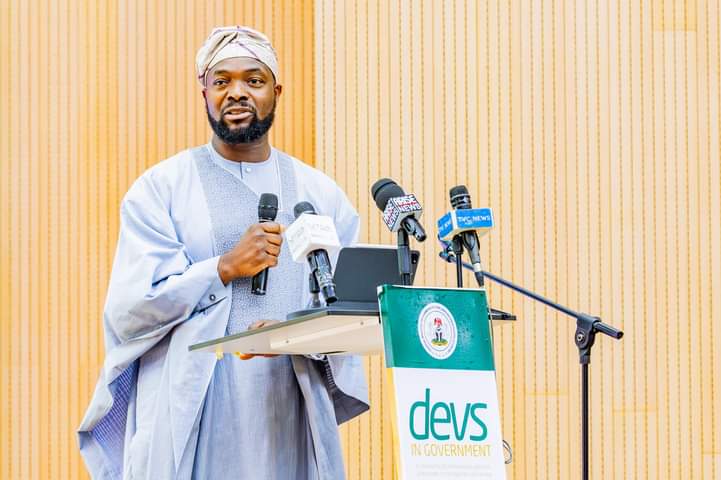
When Dr. ‘Bosun Tijani, Nigeria’s Minister of Communications, Innovation and Digital Economy, announced Nigeria’s dramatic rise in the Oxford Government AI Readiness Index 2025, the numbers told a story that most observers missed: Nigeria isn’t just catching up in artificial intelligence—it’s building the infrastructure to lead.
Nigeria climbed 31 places in two years, moving from 103rd in 2023 to 72nd out of 195 countries in 2025. That places the nation in the 37th percentile globally and fourth in Sub-Saharan Africa, behind only Kenya (65th), South Africa (67th), and Mauritius (71st). But aggregate rankings obscure the more consequential story: where Nigeria is building strength, and what it signals about the continent’s AI trajectory.
Where Nigeria Is Actually Winning
The Oxford Index assesses governments across six pillars: policy capacity, governance, AI infrastructure, public sector adoption, development and diffusion, and resilience. Nigeria’s overall 72nd ranking masks exceptional performance in two critical areas:
Policy Capacity: 35th globally
Nigeria ranks 35th in the world for policy capacity, a remarkable achievement reflecting the country’s well-defined National AI Strategy, comprehensive regulatory frameworks, and demonstrated commitment to international collaboration. For context, Nigeria now ranks ahead of numerous developed economies in its ability to create coherent AI policy.
This isn’t accidental. The National Information Technology Development Agency (NITDA) and the National Centre for AI and Robotics (NCAIR) have spent the past two years building policy infrastructure that aligns strategic vision with execution frameworks. The result is a regulatory environment sophisticated enough to attract international investment while flexible enough to support local innovation.
Development & Diffusion: 49th globally
Nigeria jumped into the global top 50 for development and diffusion, ranking 49th worldwide. This pillar measures talent development, research capacity, AI sector maturity, and technology diffusion—essentially, whether a country can produce AI innovation domestically rather than importing it.
The 49th ranking reflects Nigeria’s expanding AI talent pool, increasing research output, and growing ecosystem of AI startups and research institutions. Combined with the top-35 policy ranking, it suggests Nigeria has built the foundational elements required for sustainable AI development: clear rules and capable people.
The Strategic Shift: AI as National Infrastructure
Minister Tijani’s framing is critical to understanding Nigeria’s approach. The country doesn’t view AI as a future concept or experimental technology—it treats AI as “critical national productivity infrastructure,” placing it alongside electricity, roads, and telecommunications as essential for economic development.
This shift from “nice to have” to “must have” explains the urgency behind Nigeria’s AI initiatives. When a country of 220 million people with a rapidly growing youth population treats AI as infrastructure, the investment calculus changes dramatically. You don’t experiment with infrastructure—you build it at scale.
The implications are profound. Nigeria isn’t asking whether to invest in AI; it’s asking how quickly it can deploy AI across government, business, and society to drive the productivity gains required to reach President Bola Ahmed Tinubu’s $1 trillion economy target.
Three Initiatives Converting Readiness into Impact
Nigeria’s rise in the rankings reflects not just policy documents but operational programs designed to convert AI readiness into measurable outcomes. Three initiatives stand out:
1. The AI Collective
Launched following a national AI workshop convened by the Ministry in April 2025, the AI Collective is a community of practice collaborating to accelerate Nigeria’s collective prosperity through an inclusive AI ecosystem.
The Collective is managed by three organizations—Data Science Nigeria, Lagos Business School, and the Center for Journalism, Innovation, and Development—with $1.5 million in support from Luminate over three years. Rather than a top-down government program, the Collective operates as a convening mechanism bringing together researchers, entrepreneurs, policymakers, and civil society to shape Nigeria’s AI trajectory collaboratively.
Why This Matters: Most countries treat AI development as either purely private sector-driven or purely government-controlled. Nigeria is attempting a hybrid model that leverages private sector innovation, academic research, and government coordination. If successful, this collaborative approach could become a template for other emerging economies navigating AI development.
2. The AI Trust
The National Artificial Intelligence Trust is being established as an independent body ensuring AI development in Nigeria is ethical, safe, and sustainable. Unlike typical regulatory agencies, the Trust is designed to work alongside the government as a partner rather than enforcer, focusing on building trust in AI systems among Nigerian citizens and businesses.
One of the Trust’s core functions will be monetizing Nigeria’s language models and digitized data, with proceeds reinvested into further AI development. This creates a sustainable funding mechanism for ongoing AI infrastructure rather than relying solely on government budgets or international donors.
Strategic Implication: By establishing independent governance structures early, Nigeria is attempting to avoid the pitfalls that have plagued AI development in other markets—either regulatory paralysis that stifles innovation or regulatory absence that enables harmful deployment.
3. N-ATLAS: Nigeria’s Multilingual Large Language Model
Perhaps the most tangible demonstration of Nigeria’s AI ambitions is N-ATLAS (Nigerian Atlas for Languages & AI at Scale), unveiled on the sidelines of the 80th United Nations General Assembly in September 2025.
N-ATLAS is a multilingual, multimodal, open-source large language model supporting Yoruba, Hausa, Igbo, and Nigerian-accented English. Built on Meta’s Llama-3 8B architecture and fine-tuned with over 400 million tokens of multilingual instruction data, it represents Nigeria’s most ambitious step toward embedding African voices in AI development.
Technical Specifications:
- Supports four languages: Yoruba, Hausa, Igbo, and Nigerian-accented English
- Built on Meta’s Llama-3 8B architecture
- Fine-tuned with 400M+ tokens of multilingual instruction data
- Includes language-specific automatic speech recognition models
- Open-source and freely available for developers, researchers, and innovators globally
Applications:
- Chatbots providing government services in local languages
- Call center automation with Nigerian accent recognition
- Translation services for underrepresented languages
- Transcription of radio, television, and online videos into text
- Captioning and subtitling in Nigerian languages
- Education tools teaching in mother tongues
Minister Tijani framed N-ATLAS as “more than a language model; it is a national commitment to unity, inclusion, and global contribution.” Silas Adekunle, CEO and co-founder of Awarri (the company powering N-ATLAS), emphasized that “too often, the technologies we rely on are built for contexts far removed from our realities. With N-ATLAS, Nigeria’s voices and languages are not just immortalized but amplified in the age of artificial intelligence.”
Why This Is Strategic: Most African countries rely on AI models trained predominantly on English or other European languages, with minimal representation of African languages and cultural contexts. This creates AI systems that work poorly for African users and reinforce linguistic and cultural dominance of Western nations.
By building indigenous language models, Nigeria is creating AI infrastructure that works for Nigerians first, then can be adapted for broader African use. The open-source release ensures that developers across the continent can build on Nigeria’s work rather than starting from scratch.
The Ecosystem Play: N-ATLAS was developed through a partnership between Awarri, DataDotOrg, NITDA, and NCAIR, supported by over 7,000 fellows from the 3 Million Technical Talent (3MTT) Nigeria program. This model—government coordination, private sector execution, talent program integration—is how Nigeria is attempting to build sustainable AI infrastructure rather than one-off projects.
The National AI Centre of Excellence: Building Institutional Capacity
On January 7, 2026, during the 50th Convocation Ceremony of the University of Jos, Minister Tijani announced the launch of Nigeria’s first National AI Centre of Excellence, aimed at boosting AI research, training, and innovation.
While details remain limited, the Centre signals Nigeria’s recognition that AI readiness requires institutional capacity beyond policy documents and startup ecosystems. Research centers, training programs, and academic partnerships create the sustained knowledge production and talent development required for long-term competitiveness.
The location at the University of Jos also signals geographic diversification. Much of Nigeria’s tech ecosystem concentrates in Lagos, with secondary hubs in Abuja and Port Harcourt. Establishing the AI Centre of Excellence in Plateau State creates a new node for AI research and development outside traditional tech corridors.
What Nigeria Still Needs to Fix
The Oxford Index’s pillar-by-pillar breakdown reveals where Nigeria’s AI readiness remains weak, and these gaps matter as much as the strengths:
AI Infrastructure: Below Global Average
Nigeria’s physical and digital infrastructure for AI remains constrained. Reliable electricity, high-speed internet connectivity, data center capacity, and compute resources all lag behind what’s required for large-scale AI deployment.
The country accounts for less than 1% of global AI compute capacity. Without significant investment in GPU clusters, data centers, and renewable-powered compute infrastructure, Nigeria will struggle to train and deploy AI models domestically, forcing continued reliance on foreign cloud providers.
Public Sector Adoption: Critical Gap
Nigeria ranks far lower in public sector AI adoption than in policy capacity or private sector innovation. This gap between policy intent and government implementation is the most significant risk to Nigeria’s AI trajectory.
Many Nigerian government agencies lack the digital systems, data infrastructure, and technical capacity to deploy AI effectively. Creating policy frameworks is one thing; actually using AI to improve tax collection, healthcare delivery, or education outcomes is entirely different.
Regional Infrastructure Constraints
Sub-Saharan Africa as a whole ranks 9th out of nine global regions, with an average score of 28.04. Nigeria’s performance is strong relative to regional peers, but the entire region faces structural challenges that no single country can overcome alone:
- Inadequate electricity infrastructure
- Limited broadband penetration and high data costs
- Shortage of AI-trained technical talent
- Fragmented markets with limited economies of scale
- Capital constraints limiting private sector AI investment
Nigeria’s success depends partly on regional progress. A strong Nigerian AI ecosystem will lift the region, but regional weaknesses will also constrain Nigeria’s potential.
The Top 50 Challenge
Minister Tijani concluded his announcement with a direct challenge: “Can Nigeria move into the global top 50 for AI capability?”
Currently ranked 72nd overall but 35th in policy capacity and 49th in development and diffusion, Nigeria needs to address three areas to crack the top 50:
1. Public Sector Adoption Must Accelerate
Nigeria needs to close the gap between strong policy frameworks and weak government implementation. This requires:
- Digitizing government services and data
- Training civil servants in AI literacy and usage
- Deploying AI pilots across federal and state agencies
- Measuring and publicizing impact to build momentum
2. Infrastructure Investment Must Scale
Nigeria needs significant investment in AI compute infrastructure, data centers, and energy to power them. Options include:
- Public-private partnerships for data center development
- Incentives for international cloud providers to establish Nigerian infrastructure
- Investment in renewable energy to power compute at scale
- Subsidized access to compute for Nigerian researchers and startups
3. Talent Development Must Broaden
While the 3MTT program is training technical talent, Nigeria needs broader AI literacy across government, business, and society. This includes:
- AI curriculum integration in secondary and tertiary education
- Executive education for business leaders and policymakers
- Public awareness campaigns about AI opportunities and risks
- Support for AI research centers beyond Lagos and Abuja
If Nigeria addresses these three areas while maintaining its policy leadership and private sector innovation, cracking the top 50 within 2-3 years is achievable. Countries like Estonia (ranked 31st), UAE (ranked 23rd), and Singapore (ranked 7th) demonstrate that rapid AI ascension is possible with focused execution.
What Nigeria’s Rise Means for Africa
Nigeria’s 31-place jump in AI readiness matters beyond its borders. As Africa’s most populous country and largest economy, Nigeria’s approach to AI development will influence the continent’s trajectory in three ways:
1. Policy Template for Other African Countries
Nigeria’s National AI Strategy, regulatory frameworks, and governance structures are already being studied by other African governments. The combination of clear policy direction, private sector collaboration, and international partnerships provides a template that smaller African economies can adapt.
2. Talent and Investment Magnet
As Nigeria builds AI infrastructure and implements supportive policies, it will attract both African talent and international investment seeking African market access. This could accelerate brain gain rather than brain drain, with African AI talent choosing Lagos or Abuja over Silicon Valley or London.
3. African AI Standards and Norms
By building indigenous language models and emphasizing ethical, inclusive AI development, Nigeria is attempting to shape African AI norms before they’re imposed from outside. If Nigeria succeeds, other African countries will adopt similar approaches. If Nigeria fails, the continent will continue relying on AI systems built elsewhere, reflecting other contexts and values.
The $1 Trillion Economy Equation
President Tinubu’s goal of building a $1 trillion economy provides context for Nigeria’s AI urgency. Nigeria’s GDP currently sits around $500 billion. Doubling it requires sustained productivity growth across all sectors—agriculture, manufacturing, services, government.
AI is the productivity multiplier. Applied correctly across Nigeria’s economy, AI could:
- Increase agricultural yields through precision farming and crop monitoring
- Optimize logistics and reduce post-harvest losses
- Improve healthcare diagnostics and expand telemedicine access
- Enhance education through personalized learning systems
- Automate routine government services, reducing corruption and inefficiency
- Create new export markets for Nigerian AI services and products
The $1 trillion target isn’t just about attracting foreign investment or discovering oil. It’s about fundamentally increasing output per capita through technology-enabled productivity gains. AI is the fastest path to those gains, which is why Nigeria is treating it as critical infrastructure rather than experimental technology.
Realism Check: Hype vs. Reality
Nigeria’s AI story is compelling, but it’s important to separate aspiration from execution. Several realities temper the optimistic narrative:
Electricity Remains a Fundamental Constraint: Nigeria generates roughly 4,000-5,000 megawatts of electricity for 220 million people. South Korea generates 120,000 megawatts for 52 million people. AI data centers and compute infrastructure are power-intensive. Without reliable, affordable electricity at scale, Nigeria’s AI ambitions will be constrained by basic physics.
Brain Drain Continues: Despite initiatives like 3MTT, many of Nigeria’s best AI researchers and engineers still emigrate to higher-paying opportunities abroad. Until Nigerian AI salaries and working conditions compete with international alternatives, talent retention will challenge domestic capacity building.
Implementation Track Record Is Mixed: Nigeria has announced ambitious technology initiatives before—national broadband plans, digital transformation programs, startup funding schemes—with inconsistent follow-through. Whether the AI push proves different will depend on sustained political commitment and bureaucratic execution beyond initial announcements.
Funding Gaps Remain Large: The $1.5 million Luminate grant and N100 million Google fund (approximately $67,000) are symbolically important but financially insufficient for large-scale AI development. Nigeria needs orders of magnitude more capital to build the infrastructure and talent base its ambitions require.
That said, Nigeria’s approach appears more sophisticated than previous technology initiatives. The combination of policy frameworks, institutional capacity building (AI Centre of Excellence, AI Trust), operational programs (AI Collective, N-ATLAS), and international partnerships suggests more comprehensive planning than typical government tech announcements.
The Geopolitical Context
Nigeria’s AI push occurs against a backdrop of intensifying geopolitical competition. The United States and China dominate global AI development, with Europe positioning itself as the regulatory alternative through frameworks like the EU AI Act.
African countries face a choice: align with one of these blocs, adopt a hybrid approach, or attempt to build independent capability. Nigeria appears to be pursuing the hybrid strategy:
- Collaborating with Western organizations (Luminate, Google) for funding and technical support
- Using Chinese-style industrial policy for strategic sectors (National AI Strategy, government coordination)
- Learning from European regulatory approaches (ethical AI frameworks, AI Trust governance)
- Building indigenous capacity to avoid total dependence on any single bloc
This strategy is pragmatic but carries risks. Balancing relationships with competing global powers while building domestic capability requires sophisticated diplomatic and technical execution. If Nigeria succeeds, it could position itself as an AI bridge between global blocs. If it fails, it risks being caught in the middle with insufficient independent capability.
What to Watch in 2026
Nigeria’s AI trajectory in 2026 will be determined by execution in five areas:
1. N-ATLAS Adoption Metrics: How many developers, companies, and government agencies actually use N-ATLAS? Open-source models are only as valuable as their adoption. Track applications built on N-ATLAS, languages added beyond initial four, and integration into government services.
2. AI Centre of Excellence Operational Launch: The National AI Centre was announced in January 2026 but details remain scarce. Watch for operational launch timelines, funding commitments, research partnerships, and early outputs.
3. Public Sector AI Pilots: Nigeria’s weak public sector adoption is the critical gap. Look for pilot programs deploying AI in specific government services—tax collection, healthcare, education, citizen services. Success stories will validate the strategy; failures will expose implementation challenges.
4. Infrastructure Investment Announcements: Nigeria needs significant capital for data centers, compute infrastructure, and energy. Watch for public-private partnerships, foreign direct investment in AI infrastructure, and government capital commitments.
5. Regional Positioning: Will Nigeria successfully position itself as Africa’s AI hub, attracting talent and investment from across the continent? Or will Kenya, South Africa, and Egypt continue closing the gap? Track where African AI startups incorporate, where international AI companies establish African headquarters, and where the continent’s AI conferences and events locate.
The Bottom Line
Nigeria has climbed 31 places in global AI readiness in two years, moving from 103rd to 72nd and cracking the top 50 in policy capacity (35th) and development/diffusion (49th). This rise reflects comprehensive strategy, not isolated initiatives—policy frameworks, talent development, indigenous language models, governance structures, and international partnerships.
The challenge Minister Tijani posed—can Nigeria reach the global top 50?—is achievable if the country addresses three gaps: public sector adoption, infrastructure investment, and broadened talent development. Nigeria has built the policy foundation and private sector innovation capacity. Now comes the hard part: implementation at scale.
For Africa, Nigeria’s trajectory matters enormously. If Africa’s most populous country and largest economy successfully builds AI capability, it creates a template and attracts resources that lift the entire region. If Nigeria’s AI ambitions stall, it signals that even Africa’s strongest economies struggle to compete in frontier technology.
The next two years will determine whether Nigeria’s AI story is a sustainable ascent or a temporary spike. Either way, Nigeria is no longer content to be an AI consumer. The country is building to produce, and that shift—from policy to infrastructure, from ambition to execution—is what makes Nigeria’s AI journey worth watching.






Comments 1