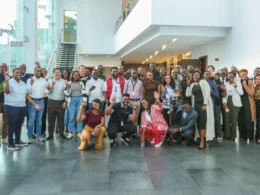
When Kenya’s Wasoko and Egypt’s MaxAB announced their all-stock merger in December 2023, the narrative was triumphant. Two of Africa’s most-funded B2B e-commerce platforms, collectively backed by Tiger Global, Silver Lake, and British International Investment with over $240 million raised, were combining forces to create a pan-African retail distribution powerhouse. Over 450,000 merchants. Five markets. A claimed 65 million consumers reached. The continent’s largest tech merger to date.
The reality, eighteen months later, looks nothing like that story.
Daniel Yu, the founder who built Wasoko from a 2013 startup in Dar es Salaam into a $625 million-valued company, stepped down as co-CEO in September 2025. Mohamed Ben Halim, MaxAB’s co-founder and COO, quietly exited in late 2024. Key Kenyan executives — the CFO, CTO, and head of HR — departed in early 2024. Wasoko laid off over 100 employees, shut down its Zanzibar office, and paused operations in Uganda and Zambia.
And now, as post-merger integration enters its second year, the combined entity is executing a wholesale leadership reshuffle, moving away from the founder-operators who built the business on growth-at-all-costs venture capital and replacing them with seasoned fintech and P&L management professionals. Belal El-Megharbel, MaxAB’s co-founder, remains as sole CEO, but the broader leadership bench is being rebuilt from scratch — and the mandate is clear: make fintech work, because e-commerce doesn’t.
This is not the story of a successful merger. This is the story of a company that merged to survive, discovered that survival required abandoning its core business model, and is now systematically replacing the people who built that model with operators who know how to run profitable financial services at scale.
The Founders Who Are No Longer Running the Show
Daniel Yu’s departure in September 2025 was framed as a natural transition. After eleven years building Wasoko, Yu announced on LinkedIn that he was stepping back from day-to-day operations, remaining as an advisor, and relocating to India to focus on personal projects, including his role as board chair of Malengo, a nonprofit supporting international education.
The timing, one year after the merger closed, is not coincidental. Yu’s exit followed a pattern that has become familiar across African tech: founder steps down, cites personal reasons, remains “closely involved” as an advisor, and quietly fades from operational relevance. Belal El-Megharbel, who had already been overseeing operations and technology since the merger while Yu focused on investor relations and corporate development, took full leadership of the combined entity.
But Yu’s departure was not an isolated event. In late 2024, Mohamed Ben Halim, MaxAB’s co-founder and COO, also left the company. The departure was not publicly announced or explained, but sources close to the company describe it as part of an “ongoing restructuring process to align both legacy businesses.” Translation: the MaxAB and Wasoko teams didn’t integrate smoothly, and Ben Halim, who had built MaxAB’s operations from the ground up, was no longer seen as the right fit for the merged entity’s new direction.
That direction — fintech over e-commerce, profitability over growth, P&L discipline over market expansion — required a different kind of operator. And Ben Halim, like Yu, was a founder. Founders build. They raise capital. They inspire teams. They chase audacious visions. What they don’t always do well is run low-margin businesses with tight unit economics, manage complex financial services licensing, and extract profit from operations that were designed to burn cash in pursuit of market share.
The boardroom clearly decided it needed fewer builders and more operators. And so the purge began.
The Regional Leadership Overhaul You Haven’t Heard About
While Yu’s and Ben Halim’s departures made headlines, the more consequential reshuffling has been happening at the regional level, where the day-to-day operations that determine whether the business lives or dies are actually run.
In Morocco, MaxAB installed Othmane Benzakour as CEO of its two local subsidiaries, ABmaxCo and MaxPay. Benzakour, who comes from a fintech and payments background, immediately announced a strategic pivot. “We are currently focusing our efforts on developing our fintech activities in Morocco and preparing for the launch of our marketplace,” he told local press in mid-2025. “During this transition phase, we have decided to slow down our e-commerce activities.”
That’s industry-speak for: we’re winding down the loss-making logistics business and betting on payments. Morocco, which was supposed to be a key expansion market for the merged entity, is now effectively a fintech pilot.
In Egypt, the group’s largest and most profitable market, leadership has been consolidated under El-Megharbel, but the operational mandate has shifted entirely to fintech. The company secured a financial services license from Egypt’s Central Bank in July 2025, allowing it to facilitate cash deposits and withdrawals for informal retailers through partnerships with Banque Misr and Egyptian Banks Company. That license transformed MaxAB from a logistics company into a quasi-banking channel for thousands of merchants.
Aladdin ElAfifi, CEO of EFG Finance (a subsidiary of regional financial powerhouse EFG Holding), described the transaction as a “transformational step” that would “reshape informal retail” by providing small merchants with digital credit tools. EFG took a board seat at MaxAB-Wasoko through its backing of Fatura, a Cairo-based fintech marketplace that MaxAB acquired to accelerate its embedded lending capabilities.
The pattern is unmistakable. Regional leadership roles are being filled by fintech operators, not e-commerce managers. The people who know how to run warehouses, manage last-mile logistics, and negotiate supplier contracts are being sidelined. The people who know how to underwrite loans, manage regulatory compliance, and scale payment infrastructure are being promoted.
The message from the boardroom is clear: e-commerce was the Trojan horse. Fintech is the endgame.
The Unit Economics That Never Worked
To understand why the leadership overhaul is happening, you need to understand why Wasoko and MaxAB merged in the first place — and why that merger is now forcing a wholesale abandonment of the business model both companies were founded on.
B2B e-commerce for informal retailers in Africa is a brutal business. The margins on fast-moving consumer goods (FMCG) — soap, cooking oil, snacks, beverages — are razor-thin, typically 2-5%. The cost of delivering those goods to thousands of small shops scattered across cities with terrible infrastructure is enormous. Warehouse rent, truck fuel, driver salaries, inventory financing, and spoilage losses eat up most of the gross margin before you even get to overhead.
Both Wasoko and MaxAB spent years burning venture capital to acquire merchants, offer them below-market prices, and subsidize deliveries in the hope that scale would eventually bring profitability. It didn’t. At Wasoko’s peak, the company was valued at $625 million. By early 2024, investor VNV Global had marked down its stake to $260 million. By Q1 2025, VNV marked it down again by another 4%, valuing its 2.1% stake at just $10 million.
Do the math. That implies a total valuation for the merged entity of around $476 million — a 24% haircut from Wasoko’s 2022 valuation, and that’s assuming the merged company is worth more than Wasoko was standalone, which is not obvious.
The markdown “signals lingering concerns about African B2B’s fundamental economics, where warehouse-dependent models have collapsed under 2-5% FMCG margins,” according to WeeTracker’s analysis. The reality is even starker. MarketForce, one of Wasoko’s key competitors in Kenya, shut down its B2B e-commerce platform RejaReja in 2024 after confronting what it described as “perfect competition” — meaning too many players chasing the same low-margin business. Sabi, Nigeria’s B2B e-commerce hopeful, pivoted away from retail distribution entirely and is now focused on commodity exports.
The sector isn’t growing. It’s contracting. And the survivors — like MaxAB-Wasoko — are the ones who figured out how to extract value from something other than e-commerce.
Fintech: The Only Business Model Left
Here’s the pivot in numbers.
In Egypt, MaxAB-Wasoko’s fintech arm now generates over $180 million in annual turnover — more than its e-commerce transactions in the same market. The company has disbursed over $20 million in working capital loans to merchants over the past year, with a claimed repayment rate exceeding 99%. That repayment rate is possible because MaxAB has real-time transaction data on every merchant using its platform, allowing it to underwrite loans based on actual purchase behavior rather than credit scores that don’t exist in the informal economy.
“We’ve seen our fintech services in Egypt more than double in the past year,” Yu said before his departure. “It’s become our strongest value driver and will remain our top priority across all markets for the next 12 months.”
That priority is being replicated across the company’s footprint. In Morocco, MaxAB is scaling back traditional e-commerce to concentrate solely on fintech. In Kenya, Tanzania, and Rwanda, the company is rolling out similar embedded finance offerings — credit, payments, airtime top-ups, bill payments — layered on top of the merchant relationships it built through e-commerce.
The logic is straightforward. E-commerce in Africa’s informal sector operates on 2-5% margins. Fintech — especially merchant lending and payments — operates on 20-40% margins. You can lose money on every delivery and make it back on the loan you extend to fund that delivery. The e-commerce platform becomes the distribution channel. The fintech services become the revenue engine.
It’s a model that has worked elsewhere. Moniepoint in Nigeria started as a payment terminal provider and is now one of the country’s most valuable fintechs, valued at over $1 billion. OPay, also in Nigeria, started with logistics and payments and pivoted entirely to fintech. Wave in Senegal built a mobile money network by embedding agents in corner stores — exactly the model MaxAB-Wasoko is now pursuing.
The difference is that Moniepoint, OPay, and Wave were designed as fintech companies from day one. MaxAB and Wasoko were not. They were e-commerce platforms that are now trying to become fintech companies. And that transformation requires different leaders with different skill sets.
The Operators Replacing the Founders
The new leadership bench being installed at MaxAB-Wasoko reflects the strategic pivot.
Othmane Benzakour, leading Morocco operations, has deep experience in payments and digital financial services. His mandate is explicitly fintech-first, with e-commerce treated as a legacy cost center to be managed down, not expanded.
Aladdin ElAfifi from EFG Finance now holds a board seat, bringing institutional financial services expertise and access to EFG Holding’s balance sheet. EFG’s involvement signals that MaxAB-Wasoko is being repositioned as a financial services platform, not a logistics company.
Belal El-Megharbel, the sole remaining CEO, is overseeing the transition from Cairo, where the merged entity is now headquartered. El-Megharbel’s background is in e-commerce, but his public statements over the past year have been exclusively about fintech, lending, and payments. The e-commerce platform is now described as infrastructure that enables fintech, not as the core business itself.
And crucially, the company is actively hiring for fintech roles — compliance officers, credit risk managers, payment operations leads — while scaling back logistics and supply chain hiring. The org chart is being redrawn around financial services, not around warehouses.
The Markets That Are Being Abandoned
The leadership reshuffle is also driving geographic retrenchment. MaxAB-Wasoko originally operated in eight markets. It’s now down to five: Egypt, Morocco, Kenya, Tanzania, and Rwanda. Uganda, Zambia, Côte d’Ivoire, and Senegal have all been paused or shuttered.
The logic is clear. Egypt is the fintech anchor — over $180 million in annual fintech turnover, regulatory licenses in place, strong institutional partnerships. Morocco is the fintech pilot — still small, but strategically positioned as North Africa’s gateway. Kenya, Tanzania, and Rwanda are the East African cluster, where M-Pesa and mobile money infrastructure make embedded finance viable.
The markets that got cut — Uganda, Zambia, Côte d’Ivoire, Senegal — are markets where either regulatory barriers to fintech are higher, mobile money penetration is lower, or the merged entity simply didn’t have the operational density to make the pivot work.
This is not expansion. This is consolidation. And consolidation requires operators who know how to extract maximum value from existing infrastructure, not founders who want to chase new markets.
What This Means for African B2B E-Commerce
MaxAB-Wasoko’s leadership overhaul and strategic pivot is not an isolated story. It’s a symptom of a broader reckoning in African B2B e-commerce.
The sector raised hundreds of millions of dollars between 2019 and 2022 on the thesis that digitizing informal retail distribution would unlock enormous value. Investors bet that companies like Wasoko, MaxAB, TradeDepot, MarketForce, and Sabi could consolidate fragmented supply chains, reduce costs through scale, and eventually dominate a $600 billion informal retail sector.
That thesis has failed. The margins didn’t materialize. The scale didn’t bring profitability. And the venture capital that funded the growth stopped flowing.
What’s left is a handful of survivors trying to find a different business model. MaxAB-Wasoko is pivoting to fintech. TradeDepot is pivoting to advertising and data. MarketForce shut down its e-commerce arm entirely. Sabi is pivoting to commodity exports.
The common thread is that pure-play B2B e-commerce for informal retailers does not work as a standalone business. It only works if you can layer higher-margin services — fintech, advertising, data, SaaS — on top of the merchant relationships you build through logistics.
And building those higher-margin businesses requires different leaders. Leaders who understand regulatory compliance, credit risk, payment infrastructure, and financial services distribution. Leaders who can turn a logistics network into a fintech platform.
That’s why the founders are being shown the door. Not because they failed. But because the business they built isn’t the business the company needs to become.
The Verdict: Survival, Not Success
Daniel Yu spent eleven years building Wasoko into one of Africa’s most recognizable B2B e-commerce brands. Mohamed Ben Halim helped scale MaxAB into North Africa’s e-commerce leader. Both deserve credit for what they accomplished.
But neither of them is running the company anymore. And the company they built no longer does what it was originally designed to do.
MaxAB-Wasoko’s post-merger trajectory is not a success story. It’s a survival story. The company merged because both entities were running out of runway. It’s pivoting to fintech because e-commerce doesn’t generate the margins needed to sustain venture-scale returns. And it’s replacing its founder-led leadership with P&L operators because survival requires discipline, not vision.
Whether that pivot works remains to be seen. Egypt’s fintech metrics are strong — $180 million in turnover, 99% loan repayment rates. But Egypt is also the only market where the fintech business is fully scaled. Morocco is still a pilot. Kenya, Tanzania, and Rwanda are early-stage. And the company is operating with no new capital, forcing it to fund the pivot through cash flow from operations.
The next twelve months will determine whether MaxAB-Wasoko becomes the model for how African B2B e-commerce companies can successfully pivot to fintech — or whether it becomes another cautionary tale about what happens when venture-backed companies run out of easy capital and discover that the business model they built doesn’t actually work.
For now, the founders are out. The operators are in. And the bet is on fintech, not e-commerce.
Time will tell if that bet pays off.
MaxAB-Wasoko is headquartered in Cairo, Egypt, and operates in five African markets. The company was formed through an all-stock merger completed in August 2024.