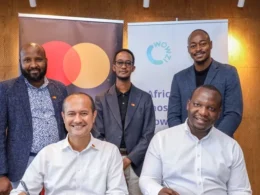
Uganda has officially licensed Starlink to operate in the country, ending a months-long regulatory standoff that at one point saw the satellite internet service switched off entirely. President Yoweri Kaguta Museveni witnessed the signing of a Memorandum of Understanding and operational licence agreement between the Uganda Communications Commission (UCC) and Starlink on May 15, 2026 — officially opening the East African country to SpaceX’s satellite broadband service.
The path here was anything but smooth.
In December 2025, the Uganda Revenue Authority restricted the importation of Starlink hardware, requiring written clearance from General Muhoozi Kainerugaba — the president’s son and army chief — for any equipment entering the country. Days later, following a formal complaint from the Ugandan government, Starlink disabled its network nationally from January 1, 2026. All terminals operating in Uganda went dark. The company explained at the time that it had not officially marketed or sold services in Uganda, and that any Ugandan users had independently imported hardware from neighbouring countries, primarily Kenya, where Starlink already operated legally.
That hardware shutdown was tied directly to Uganda’s presidential election cycle. The government’s concerns about satellite internet operating outside the licensing framework — and beyond the state’s ability to intercept or restrict — were hard to separate from the political context. Internet disruptions around election periods have become a recurring feature across the continent, and Starlink’s position in the hands of private citizens without regulatory oversight was an uncomfortable variable for Kampala to absorb.
Now that the election has passed and Museveni has emerged as the winner, Starlink is getting its licence. The sequence is worth noting: restriction before elections, approval after. Whether that sequence reflects principled regulatory process or political calculation is the question Ugandans and observers will keep asking.
With the licence formalised, Uganda becomes Starlink’s 28th African market and its third expansion on the continent in 2026, following earlier launches in Senegal and the Central African Republic. Airtel Africa’s Direct-to-Cell partnership with SpaceX, announced last year, signals that SpaceX sees Africa as a core long-term market rather than an opportunistic one — and Uganda is a meaningful addition to that footprint.
The connectivity case for Starlink in Uganda is genuine. Internet penetration sits at around 50 percent, and the country’s data market has long been dominated by MTN Uganda and Airtel Uganda, with limited competition driving up costs and keeping quality inconsistent. Ugandan consumers have complained for years about unreliable service at high prices. Starlink, which bypasses ground-based infrastructure entirely by connecting through low-Earth orbit satellites, could introduce real pricing pressure — particularly in rural areas where fiber rollout is economically unviable and cell towers thin on the ground. Schools, hospitals, and small businesses in remote districts stand to gain the most from reliable high-speed connectivity.
The affordability question, however, remains live. Starlink hardware and subscription costs have historically been out of reach for a significant portion of African consumers. The service’s expansion in Nigeria showed rapid subscriber growth among urban professionals and businesses — Starlink became Nigeria’s second-largest ISP with over 65,000 subscribers within two years of licensing — but mass-market penetration in lower-income populations is a different challenge. Uganda’s GDP per capita makes that challenge steeper than in Nigeria.
Museveni framed the deal in economic terms. “Reliable internet is no longer a luxury,” he said at the signing. “It is now essential infrastructure for economic growth.” The MoU specifically references security, revenue assurance, and accountability as priorities for the UCC under the agreement — language that reflects lessons learned from the earlier unlicensed period, and that will govern how Starlink operates within Uganda’s regulatory environment going forward.
The UCC’s terms will matter enormously. If Uganda’s framework gives regulators broad authority to throttle or shut down service — as the January blackout demonstrated was technically possible — then Starlink’s arrival changes connectivity access without necessarily guaranteeing it. A licence is an improvement over an outright ban. It is not a guarantee that the service will remain available when governments feel threatened.
For East Africa, the broader picture is becoming clearer. Starlink’s continental expansion across more than 28 African markets is reshaping how connectivity reaches the continent’s most underserved populations — but it is also establishing SpaceX as a geopolitical actor whose relationship with each government shapes what access actually means in practice. Uganda’s experience — blocked, then licensed on terms defined by the winning side of an election — is a preview of what that dynamic can look like at its most explicit.
What comes next in Uganda will depend on pricing, rollout speed, and the conditions embedded in the UCC licence. If Starlink moves quickly and aggressively on consumer pricing, it could be a genuine game-changer for Ugandan connectivity. If it moves cautiously, protecting incumbent operators while maintaining regulatory goodwill, the real beneficiaries will be the business segment that can already afford it.