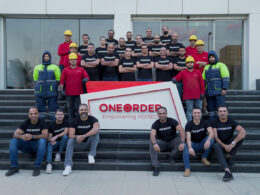
The iDICE Startup Bridge has singled out 10 founders from its inaugural Founders Lab cohort as its standout performers, a symbolic milestone for a $617 million federal programme still working to prove it can turn development finance into founder outcomes at scale.
The list, shared by iDICE Startup Bridge, names Stanley Akpeji Grace of Geecie Terra Ltd, Abeeb Junior Mohammed of RareMed Supply, Osamor Michael of Bankable Ltd, Idowu Tolulope of Ludara Africa Ltd, Ojobo Benjamin of Munchdash Ltd, Oladele Joanne of Rivheal, Etim Emmanuel of PitchNest, Monovie Izibeikien of Chapta, Udochi Nadia of Majen Technologies, and Muniru Suleiman of Global Shining Digital Works.
Why This Cohort Matters for Nigeria’s Startup Pipeline
The 10 founders emerged from a pool of 185 selected for Founders Lab Cohort 1, itself drawn from more than 7,000 applications after the programme opened in March 2026. Only 500 applicants made it past the first shortlist.
Founders Lab is one of two tracks under iDICE Startup Bridge, the founder-support arm of the broader Investment in Digital and Creative Enterprises programme. It is co-financed by the African Development Bank, Agence Française de Développement, and the Islamic Development Bank, with the Bank of Industry acting as executing agency. Vice President Kashim Shettima chairs the programme’s steering committee.
Unlike the Growth Lab, which targets post-MVP startups with $100,000 in equity funding, Founders Lab is built for idea-stage and early-prototype entrepreneurs. Cindy Ezerioha, the programme’s head, has described it as a bridge connecting unproven potential to investable business models. The 12-week track feeds into a grant pool of up to ₦10 million per founder, with a maximum of 100 recipients per cohort.
The programme’s founding pitch was explicit about geography. By opening applications across all 36 states and the FCT, iDICE set out to loosen Lagos and Abuja’s grip on Nigeria’s startup capital, which has historically absorbed the overwhelming majority of venture funding raised on the continent.
A Regional Gap in the Spotlight
That pledge is where the Top 10 list gets interesting. Four of the highlighted founders — Stanley Akpeji Grace, Osamor Michael, Ojobo Benjamin, and Muniru Suleiman — are based in the North Central zone. Three more, including Idowu Tolulope and Udochi Nadia, are from the South West. South South accounts for two, and North East for one. North West and South East, two of Nigeria’s six geopolitical zones, are absent entirely from the list.
For a programme that has staked its legitimacy on reaching founders outside the traditional hubs, a marquee recognition list that skips two full zones is a fair question to raise. It does not necessarily reflect the eventual grant distribution, since the Top 10 appears to be a promotional highlight rather than the final list of the 100 founders who will receive ₦10 million each. But optics matter for a programme trying to convince founders in underserved states that the opportunity is real and evenly distributed.
The sectors represented also skew toward logistics, healthtech, and fintech-adjacent ventures — RareMed Supply in pharmaceutical distribution, Munchdash in food delivery, Bankable and Majen Technologies in financial services — a spread that tracks with where Nigerian early-stage capital has traditionally flowed rather than a dramatic reordering of priorities.
iDICE has already faced scrutiny over the gap between its 2023 launch announcement and actual capital reaching founders; a $729,000 disbursement surfaced only this year, years after the programme’s headline figures were first announced. Cindy Ezerioha and the Bank of Industry have not detailed how the Top 10 was scored, what criteria separated them from the other 175 founders in the cohort, or whether they are guaranteed a place among the 100 grant recipients.
Cohort 2 applications closed in late July 2026, and the programme has said it will run two cohorts annually. Whether the Top 10 recognition translates into faster access to the ₦10 million grants, or whether it is simply a marketing exercise ahead of the full grant announcement, will say more about iDICE’s credibility than the list itself.