



The NBA has never been shy about its African ambitions. Since establishing NBA Africa in 2010 and launching the Basketball Africa League (BAL) in 2021, the world’s most valuable sports league has positioned the continent as central to its global growth strategy—not just as a talent pipeline for future NBA stars, but as a market ripe for digital transformation.
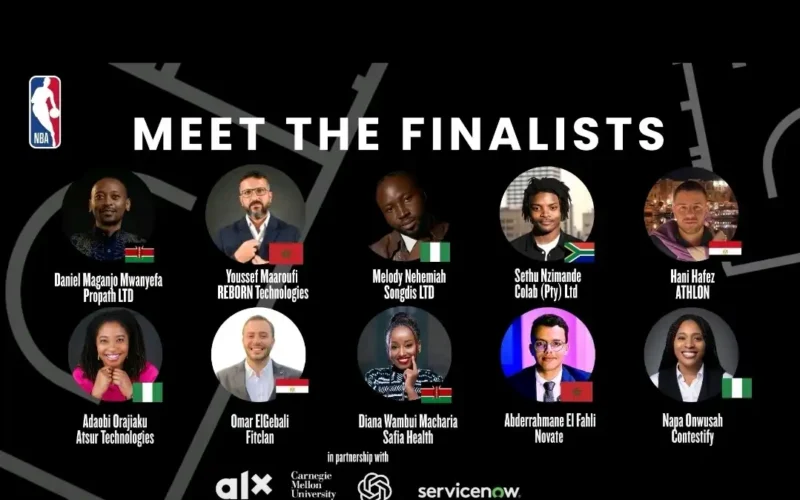
Now, that vision is getting concrete. NBA Africa has unveiled the 10 finalists for its second annual Triple-Double Accelerator, a program that attracted over 700 applications from 32 African countries. The finalists represent five nations—Kenya, Morocco, Nigeria, South Africa, and Egypt—and span solutions in event tech, health diagnostics, AI-powered sports analytics, and youth development platforms.
On December 5th, these 10 startups will pitch to an expert panel at Carnegie Mellon University Africa in Kigali, Rwanda. Five winners will walk away with funding, mentorship from NBA and industry leaders, and admission to CMU-Africa’s prestigious 12-month Business Incubation Programme—a launchpad that’s helped transform proof-of-concept prototypes into scalable, market-ready products.
It’s a high-stakes demo day with a compelling premise: what if the next wave of African unicorns emerges not from fintech or e-commerce, but from the intersection of sports, creative industries, and enabling technologies like AI?
The 10 Finalists: Who Made the Cut
From 700+ applications across 32 countries, NBA Africa’s selection committee—working with program operator ALX Ventures and new partner Carnegie Mellon University Africa—chose these 10:
1. Daniel Maganjo (Kenya) – ProPath LTD A sports tech platform focused on athlete development and performance tracking, addressing gaps in youth sports infrastructure across East Africa.
2. Youssef Maaroufi (Morocco) – REBORN Technologies Sustainable innovation leveraging technology to reduce waste and create circular economy solutions in the sports and events industries.
3. Melody Nehemiah (Nigeria) – Songdis LTD Digital distribution and rights management for creative content, helping African artists monetize and protect their intellectual property globally.
4. Sethu Nzimande (South Africa) – Colab (Pty) Ltd Collaboration platform connecting sports industry stakeholders—from grassroots organizations to professional leagues—facilitating partnerships and resource sharing.
5. Hani Hafez (Egypt) – ATHLON AI-powered sports analytics and performance optimization tools designed for athletes, coaches, and sports organizations.
6. Adaobi Orajaku (Nigeria) – Atsur Technologies Youth development platform combining skills training with digital credentials, preparing young Africans for careers in tech, sports management, and creative industries.
7. Omar El-Gebali (Egypt) – Fitclan Community-driven fitness and wellness platform gamifying healthy behaviors and connecting users to gyms, trainers, and group activities.
8. Diana Wambui Macharia (Kenya) – Safia Health Health diagnostics and telemedicine platform with a focus on women’s health, addressing gaps in healthcare access across underserved communities.
9. Abderrahmane El Fahli (Morocco) – Novate Innovation consultancy helping sports organizations and creative enterprises adopt emerging technologies like AI, blockchain, and immersive media.
10. Napa Onwusah (Nigeria) – Contestify Gamification and competition management platform enabling brands, leagues, and event organizers to run fan engagement campaigns at scale.
The geographic distribution is notable: Nigeria leads with three finalists, followed by Kenya, Morocco, and Egypt with two each, and South Africa with one. This mirrors broader African tech investment patterns, where Nigeria, Kenya, Egypt, and South Africa consistently attract the lion’s share of VC funding.
What They Win: More Than Just Prize Money
Unlike typical startup competitions where winners get cash and a handshake, NBA Africa’s Triple-Double Accelerator offers a comprehensive support package that addresses the specific challenges early-stage African startups face.
For the Five Winners:
Financial Support: While NBA Africa hasn’t disclosed the exact prize amounts for the second edition, last year’s inaugural program awarded $50,000 (first place), $40,000 (second place), and undisclosed amounts to third and fourth place. Expect similar or higher figures this year.
12-Month CMU-Africa Incubation: Winners gain admission to Carnegie Mellon University Africa’s Business Incubation Programme, which provides:
- Office space and infrastructure at CMU-Africa’s Kigali campus
- Technical mentorship from CMU faculty and industry practitioners
- Access to CMU’s global network of researchers, alumni, and corporate partners
- Support transforming prototypes into market-ready products
- Assistance with go-to-market strategies and customer acquisition
NBA and Industry Mentorship: Direct access to NBA Africa executives, basketball operations staff, and executives from partner organizations including ServiceNow, OpenAI, and ALX Ventures. This isn’t ceremonial—last year’s winners reported regular video calls, product feedback sessions, and introductions to potential customers and partners.
Workshops and Development Programs: Participation in specialized training covering:
- Sports marketing and sponsorship strategies
- IP protection and licensing in creative industries
- B2B enterprise sales in sports and entertainment
- Scaling operations across multiple African markets
- Fundraising and investor relations
Network Effects: Membership in the NBA Africa alumni network, including connections to last year’s four winners (Festival Coins, Salubata, HustleSasa, UBR VR), Basketball Africa League teams, and NBA Africa’s corporate partnerships across the continent.
The Application Gauntlet: 700 to 10 in 11 Weeks
The selection process was no joke. After the application window closed, NBA Africa and ALX Ventures put the 700+ applicants through an 11-week intensive accelerator that included:
Phase 1: Initial Screening (Weeks 1-3) Applications reviewed based on:
- Relevance to sports and creative industries focus areas
- Stage appropriateness (early-stage with functional MVP or beta product)
- Founder/team quality and domain expertise
- Market size and scalability potential
- Traction metrics (users, revenue, partnerships)
Phase 2: Masterclasses from World-Class Executives (Weeks 4-7) The top 50-100 startups participated in virtual sessions led by NBA Africa executives, successful African tech founders, and global industry leaders covering:
- Sports business models and revenue streams
- Building products for African markets vs. Western markets
- Distribution strategies in fragmented markets
- Regulatory navigation for cross-border operations
- Fundraising from international VCs and strategic investors
Phase 3: One-on-One Mentorship from NBA and Industry Leaders (Weeks 8-10) Finalists received personalized coaching from:
- NBA Africa C-suite executives
- Basketball Africa League operations staff
- Corporate partners including ServiceNow and OpenAI representatives
- Previous accelerator winners sharing lessons learned
- African tech ecosystem veterans
Phase 4: Hands-On Pitch Coaching (Week 11) Final prep for Demo Day, including:
- Slide deck optimization
- Storytelling and narrative development
- Handling tough questions from skeptical investors
- Delivering under pressure in front of high-profile panels
- Technical presentation logistics (video, demos, backup plans)
By December 5th, these 10 finalists will have logged dozens of hours refining their pitches, products, and go-to-market strategies—making them far better prepared than most startups pitching cold to investors.
Why Sports Tech? Why Africa? Why Now?
The NBA’s bet on African sports and creative tech isn’t random—it’s grounded in three converging trends that make this moment uniquely opportune.
1. Africa’s Sports Economy is Exploding
The continent’s sports market is projected to reach $11.6 billion by 2030, growing at 8-10% annually. Key drivers include:
- Youth demographic dividend: 60% of Africa’s 1.4 billion people are under 25, and they’re digital natives hungry for sports content and experiences
- Smartphone penetration: Now exceeding 50% in major markets, enabling mobile-first fan engagement
- Broadcast rights growth: European and global leagues (EPL, La Liga, NBA) are investing heavily in African distribution
- Local league professionalization: Basketball Africa League, CAF Champions League, domestic football leagues upgrading infrastructure and commercialization
- Sponsorship inflows: Global brands increasingly targeting African youth through sports marketing
2. Creative Industries are Africa’s Untapped Goldmine
Nigeria’s Nollywood is the world’s second-largest film industry by volume. South African music dominates global charts. Kenyan fashion exports are growing double-digits annually. Yet monetization remains broken:
- IP protection gaps: Piracy rampant, rights enforcement weak, artists losing revenue
- Distribution inefficiencies: Legacy systems favor Western platforms, creators get pennies on the dollar
- Discovery problems: Fragmented markets make it hard for African creators to find audiences at scale
- Payment friction: Cross-border payments expensive and slow, limiting collaboration
Startups solving these bottlenecks can unlock billions in value currently leaking from the continent.
3. Technology Enablers Have Reached Maturity
Five years ago, building a sports tech startup in Africa meant fighting infrastructure battles daily. Today, critical enablers are in place:
- Cloud infrastructure: AWS, Google Cloud, Microsoft Azure all have African data centers, reducing latency and costs
- Mobile money ubiquity: M-Pesa, MTN Mobile Money, and others enable seamless digital payments even for unbanked users
- 5G rollout: Major cities gaining high-speed connectivity, enabling video streaming and real-time experiences
- AI accessibility: OpenAI’s partnership with NBA Africa means finalists get access to cutting-edge tools that were science fiction three years ago
- Talent density: African tech hubs in Lagos, Nairobi, Cairo, Cape Town, and Kigali now rival many global cities for engineering and product talent
Combine growing demand, improving infrastructure, and available capital, and you get the conditions for breakout successes.
Last Year’s Winners: Proof of Concept
NBA Africa’s inaugural Triple-Double Accelerator in 2024 validated the model. Four winners emerged from 700+ applications:
1. Festival Coins (Nigeria) – $50,000 (First Place) Tix Africa, their no-code event registration and ticketing platform, now operates in Nigeria and Ghana, processing thousands of tickets for concerts, conferences, and festivals. The startup has expanded partnerships with major event organizers and is exploring expansion to Kenya and South Africa.
2. Salubata (Nigeria) – $40,000 (Second Place) Creating modular shoes from plastic waste, Salubata has scaled production, secured corporate sustainability partnerships, and is now selling in multiple African countries while also piloting in European markets.
3. HustleSasa (Kenya) – Winner The gig economy platform connecting freelancers to opportunities has grown its user base substantially, added new service categories, and raised additional capital from African VCs.
4. UBR VR (Egypt) – Winner Immersive VR experiences for sports training and fan engagement have attracted interest from Basketball Africa League teams and are piloting with youth sports academies across North Africa.
All four companies credit the NBA Africa network, CMU-Africa incubation, and mentorship as critical accelerators—not just for fundraising, but for product-market fit refinement and customer acquisition.
The Carnegie Mellon Factor: Why It Matters
CMU-Africa’s involvement as an official partner for the second edition elevates the program significantly.
Carnegie Mellon University Africa, established in Kigali in 2012, is the only U.S. research university offering full master’s degrees with dedicated faculty and operations on the continent. It focuses on Computer Science, Information Technology, Electrical and Computer Engineering, and Engineering AI—disciplines directly relevant to the accelerator’s focus areas.
What CMU-Africa Brings:
Academic Rigor: Unlike most incubators, CMU-Africa provides access to cutting-edge research, technical expertise, and a curriculum informed by one of the world’s top-ranked computer science programs.
Global Network: CMU’s Pittsburgh campus connections mean startups can tap relationships with corporate partners, researchers, and alumni across tech giants, VCs, and academic institutions.
Rwanda Advantage: Operating from Kigali provides:
- Startup-friendly regulatory environment (World Bank ranks Rwanda #38 globally for Ease of Doing Business)
- Political stability rare in the region
- English/French/Kinyarwanda language capabilities
- Growing tech ecosystem anchored by CMU-Africa, African Leadership University, and government support programs
- Strategic location bridging East, Central, and Southern African markets
Practical Infrastructure:
- Modern facilities including maker spaces, prototyping labs, and collaboration zones
- Reliable power and internet (chronic issues in many African cities)
- Access to CMU’s software licenses, cloud credits, and research tools
Winners gain 12 months embedded in this ecosystem—far more valuable than remote mentorship or a one-time cash prize.
The ALX Ventures X Factor
ALX Ventures, operating the program for the second consecutive year, brings its own firepower.
A leading African technology incubator, ALX Ventures provides skills training and operational support to emerging tech leaders. Key capabilities include:
Talent Pipeline: ALX has trained thousands of developers, product managers, and tech leaders across Africa through intensive bootcamps and fellowship programs.
Operator Expertise: Unlike many accelerators run by investors, ALX Ventures is staffed by operators who’ve built and scaled African startups—meaning mentorship is grounded in real experience, not theoretical frameworks.
Pan-African Footprint: With presence in Kenya, Nigeria, South Africa, Ghana, Egypt, and beyond, ALX can facilitate introductions, partnerships, and market entry across the continent’s key hubs.
Corporate Network: Relationships with multinational corporations, government agencies, and NGOs provide commercial opportunities for portfolio startups.
The OpenAI and ServiceNow Partnerships: AI and Enterprise Readiness
Two corporate partners deserve special attention: OpenAI and ServiceNow.
OpenAI’s Role:
The AI leader’s involvement signals recognition that African startups can be more than consumers of Western AI—they can build AI-powered products tailored to African contexts. For finalists, this means:
- Access to GPT-4 and other models with preferential terms
- Technical support for implementation and fine-tuning
- Potential showcasing at OpenAI events and platforms
- Connections to OpenAI’s startup fund and investor network
Given that half the finalists (ATHLON, Novate, potentially others) are building AI-powered solutions, this partnership is directly relevant.
ServiceNow’s Contribution:
The enterprise workflow platform brings:
- Training on B2B sales and enterprise customer acquisition
- Potential pilot projects with ServiceNow’s African enterprise customers
- Mentorship on scaling operations and managing complex implementations
- Introduction to enterprise software ecosystem partners
For startups like Colab targeting sports organizations or Atsur Technologies serving institutions, ServiceNow’s expertise in workflow automation and enterprise integration is invaluable.
What the Judges Will Look For on December 5th
Based on last year’s panel composition (which included NBA executives, VCs, and tech leaders), here’s what finalists will face:
1. Product-Market Fit: Do you actually solve a painful problem African customers will pay for? Generic pitches won’t cut it—judges want to see deep understanding of local context.
2. Traction Metrics: Revenue, users, partnerships, growth rates. Early-stage doesn’t mean no traction—judges expect meaningful validation.
3. Founder Quality: Domain expertise, execution capability, resilience, coachability. Sports and creative industries are relationship-heavy—founder credibility matters immensely.
4. Scalability: Can this work across multiple African markets? Can it eventually expand beyond Africa? Solutions that only work in one city or country face skepticism.
5. Competitive Positioning: Why you vs. alternatives? What defensibility exists? In crowded spaces like event ticketing or fitness apps, differentiation is critical.
6. Revenue Model: How do you make money? B2C, B2B, B2B2C, licensing, SaaS, transaction fees? Judges want clarity on unit economics and path to profitability.
7. Capital Efficiency: How far can prize money take you? What milestones will it unlock? Startups that need $5M to prove anything won’t inspire confidence.
8. Ecosystem Leverage: How will you use NBA Africa’s network, CMU-Africa’s resources, and partner access? Generic answers won’t impress—judges want specifics.
Beyond Kigali: What Happens After Demo Day
Winning or losing on December 5th isn’t binary. Even finalists who don’t take home top prizes gain significant value:
For Winners:
- Immediate financial runway to accelerate product development
- 12-month CMU-Africa incubation starting January 2026
- Ongoing NBA Africa mentorship and partnership opportunities
- Media exposure (TechCrunch, Disrupt Africa, local tech press will cover winners)
- VC introductions facilitated by NBA Africa and ALX Ventures
- Invitations to NBA events, Basketball Africa League games, and industry conferences
- Potential pilot projects with NBA Africa partners
For Non-Winning Finalists:
- Continued ALX Ventures network access
- Introductions to other accelerators, incubators, and funding sources
- Media coverage as finalists (valuable for fundraising and recruiting)
- Peer network with other finalists for collaboration and support
- Alumni status enabling participation in future NBA Africa initiatives
For All 700 Applicants:
Even making it to the accelerator phase provides:
- Masterclass recordings and resources
- Basic mentorship and feedback on products and pitches
- Visibility within the NBA Africa and ALX Ventures ecosystem
- Learnings applicable to future fundraising efforts
The Bigger Picture: NBA Africa’s Long Game
The Triple-Double Accelerator isn’t philanthropy—it’s strategic investment in NBA Africa’s future.
Building the Pipeline: By backing startups in ticketing, fan engagement, youth development, and sports analytics, NBA Africa is creating the infrastructure for its own growth. Winners become potential vendors, partners, and acquisition targets.
Market Development: Every successful startup solving sports or creative industry challenges makes those sectors more attractive to international investment—expanding the addressable market for NBA Africa’s commercial operations.
Talent Ecosystem: Training African entrepreneurs to build sports tech companies creates a talent pool NBA Africa can recruit from. Several accelerator alumni may eventually join NBA Africa or BAL teams in operations, marketing, or tech roles.
Brand Positioning: Associating the NBA brand with innovation, youth development, and entrepreneurship strengthens its reputation beyond basketball—critical for long-term commercial partnerships and government relations.
Deal Flow: If even one accelerator graduate becomes a unicorn, NBA Africa gains credibility as a kingmaker in African tech, attracting higher-quality future applicants and enabling NBA Ventures (the league’s investment arm) to access premium deal flow.
Think of it as venture capital meets corporate development meets brand building—a multi-dimensional strategy that compounds over years.
Challenges Ahead: What Could Derail Success
Despite momentum, real obstacles remain:
Funding Environment: African tech funding fell 31% YoY in 2024 amid global VC contraction. Even winning the accelerator doesn’t guarantee follow-on capital.
Infrastructure Gaps: Power outages, internet unreliability, and logistics challenges persist outside major hubs, constraining scalability for hardware-intensive or real-time solutions.
Fragmented Markets: Expanding from Nigeria to Kenya requires navigating different languages, currencies, regulations, payment systems, and consumer behaviors—expensive and complex for early-stage startups.
Talent Retention: African tech talent increasingly joins Western companies remotely or emigrates, making team-building difficult for local startups offering lower comp.
Corporate Procurement: Selling to African enterprises and sports organizations often means navigating bureaucracy, long sales cycles, and payment delays that burn through cash quickly.
Geopolitical Risk: Political instability in key markets (Sudan conflict impacting East Africa, Sahel security concerns, currency volatility in Nigeria and Egypt) creates uncertainty for investors and customers.
Success requires startups to be resilient, resourceful, and realistic about timelines.
What This Means for African Sports Tech
The NBA Africa accelerator signals that sports tech is maturing from experimental to investable in Africa.
Historical Context:
Five years ago, “sports tech startup” in Africa meant someone with a PowerPoint about building a fantasy football app. Investors yawned. Infrastructure was shaky, sports organizations were unsophisticated buyers, and consumer willingness to pay was unproven.
Today, the narrative has flipped:
- Basketball Africa League provides a professional sports product attracting sponsors and viewership
- Major European football clubs (Arsenal, Liverpool, PSR) have African academies and commercial operations
- Betting and fantasy sports platforms have validated consumer willingness to pay
- Event organizers are digitizing operations and seeking tech solutions
- Athletes and teams want data and analytics tools
- Brands need fan engagement platforms to reach African youth
The ecosystem is real. Capital is flowing. Customers exist. The question isn’t whether sports tech will work in Africa—it’s who captures value.
The Bottom Line: More Than Basketball
On December 5th in Kigali, 10 startups will pitch for funding, incubation, and NBA Africa’s stamp of approval. But the stakes transcend any individual company.
This is about whether African innovation can lead globally in sports and creative industries—sectors where the continent has natural advantages in talent, culture, and passion but has historically ceded value capture to Western platforms.
NBA Africa’s Triple-Double Accelerator provides infrastructure, capital, and credibility to challenge that pattern. Not through charity, but by backing founders solving real problems with scalable solutions.
Whether these 10 finalists become the next Festival Coins or Turaco—or fade into the 90% of startups that don’t make it—the program is building something durable: an ecosystem where African sports and creative tech startups have a legitimate shot at winning.
For 700+ applicants across 32 countries, that possibility alone is transformative. For the 10 heading to Kigali, the game is just beginning.






Comments 1