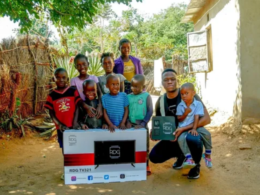
GoMed Nigeria has launched a digital self-care platform that gives University of Lagos students free access to contraceptives, reproductive health commodities, and confidential pharmacist support, in partnership with the United Nations Population Fund and the Lagos State Government. The pilot targets a problem policymakers have struggled to solve for years: getting essential reproductive health products to young people who are technically entitled to them but rarely receive them.
Under the programme, UNILAG students can request free contraceptives and other reproductive health commodities supplied through the Lagos State Ministry of Health and UNFPA, alongside discounted health products delivered discreetly to campuses and hostels. GoMed frames the platform as removing the friction points that keep students away from clinics altogether — cost, distance, and the fear of being seen or judged.
Anthony Edeki, chief executive officer of GoMed Nigeria, said the platform was built specifically to protect student confidentiality while making care accessible. “Students should be able to get reliable health information and essential products without cost, distance or fear of judgement becoming barriers,” Edeki said, positioning privacy as the core design constraint rather than an afterthought.
The numbers behind the initiative are stark. Young Nigerians face some of the highest rates of unintended pregnancy and unmet contraceptive need in the world, according to the partners, with consequences that include unsafe abortion, sexually transmitted infections, and interrupted education. UNFPA Nigeria Resident Representative Muriel Mafico described the partnership as an effort to help Nigeria’s next generation “make informed health choices,” while framing digital delivery as central to closing what the agency calls the “last mile” gap between commodity availability and actual uptake.
That last-mile framing matters. Nigeria has not lacked free family planning commodities on paper — the gap has consistently been in distribution, awareness, and the social cost of walking into a pharmacy or clinic as a young unmarried person. The platform links into UNFPA’s existing SoftLife 247 and U-Plan services, letting students chat directly with family planning providers and GoMed’s registered pharmacists rather than relying on word of mouth or unreliable information sources, a pattern of digital-first triage that African healthtech has leaned on more aggressively in recent years. TechMoonshot has tracked this shift closely, including MDaaS Global’s $3 million raise to expand its BeaconOS platform connecting diagnostic clinics across Nigeria, and NucleusIS’s rebrand as RIGO as it pushed to digitise Africa’s fragmented healthcare financing system.
GoMed’s approach also echoes a broader continental trend of health startups building around messaging and delivery rather than physical infrastructure alone, a model similar in spirit to Zuri Health’s virtual consultation and pharmacy delivery service, which won recognition at the inaugural Africa Tech Summit Awards for a comparable bet on mobile-first, stigma-reducing access.
The critical question is whether a single-campus pilot can survive contact with scale. UNILAG has one of Nigeria’s largest and most logistically manageable student populations, sitting inside Lagos with functioning last-mile delivery networks that most Nigerian universities cannot match. The partners say the rollout will “serve as a foundation” to extend the model to more university communities across Lagos State and Nigeria, but nothing in the announcement specifies a timeline, a funding commitment beyond the pilot, or how the free-commodity supply chain holds up once volume rises across multiple campuses.
There is also the durability question that dogs donor-backed health interventions in Nigeria: what happens when UNFPA funding cycles end or Lagos State priorities shift. Free contraceptive access tied to a government ministry supply chain has failed to reach students before, not for lack of design but for lack of consistent commodity flow. GoMed’s platform solves the discovery and privacy problem; it does not, on its own, solve the supply chain problem that has undermined similar efforts.
For now, the platform gives UNILAG students a low-friction, judgement-free way to access products and information that public health data says they urgently need. Whether GoMed, UNFPA, and Lagos State can turn a single-campus pilot into a sustained, multi-university service will determine if this becomes genuine infrastructure for Nigeria’s reproductive health system or another well-intentioned initiative that stalls at its starting campus.