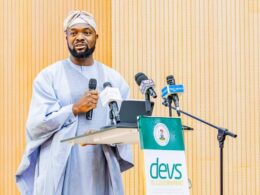
Sixteen-year-old Nigerian developer Belusochim Ugochukwu has joined Apple, taking up a role in the company’s Engineering Systems and Computer Infrastructure organisation as a machine learning engineer working on computer vision and robotics research. The appointment, confirmed in mid-August, caps a two-year run in which Ugochukwu finished high school, enrolled in college at fifteen, and moved through Y Combinator’s AI Startup School before landing at one of the world’s largest technology companies.
From Diffusion Models to a Robotic Wheelchair
Ugochukwu’s path to Apple was not built on a single breakthrough but on a stack of self-directed projects. He researched diffusion models for crystal generation, work inspired by drug discovery pipelines that use generative AI to predict viable molecular structures. He also designed and prototyped a robotic wheelchair aimed at improving mobility for people with disabilities, then pivoted toward the business side of the industry with an early-stage education venture called OpenClaw for Students.
That range, spanning generative modelling, applied robotics, and product-building, is what separates his profile from the more common teenage-coder story. Most of it was self-taught and self-financed before any institution formally recognised it, a pattern that echoes across Nigeria’s current wave of youth-driven AI talent, where founders and researchers in their teens and early twenties are building products long before venture capital or Big Tech notices them.
His most recent public project came weeks before the Apple announcement. Competing in a Google DeepMind hackathon in Chicago, Ugochukwu and a small team built Care Compass, a tool that matches residents with appropriate doctors based on their symptoms. The project, built and deployed under competition time pressure, gave him hands-on experience with backend infrastructure and deployment on Vercel, skills that map directly onto the systems role he now holds at Apple.
A Widening Pattern of Teenage Nigerian Talent
Ugochukwu is not an isolated case. He joins a small but growing list of Nigerian teenagers who have secured roles or internships at Apple well before finishing a conventional degree, most notably Ifechukwudeni “Teddy” Oweh, who graduated high school in Port Harcourt at fourteen and landed a software engineering internship with Apple’s Wireless Technologies and Ecosystem team at sixteen. Both stories follow a similar arc: early graduation, a self-built research portfolio, and a move abroad for university before the corporate offer arrives.
That pattern is worth interrogating rather than simply celebrating. Nigeria’s own talent pipelines, including government-backed efforts like the 3 Million Technical Talent Programme and corporate initiatives such as Google’s Build with AI push with GOMYCODE, are explicitly designed to keep young talent developing and working inside the country. Yet the highest-profile teenage success stories, Ugochukwu and Oweh included, still route through American universities and American employers rather than Nigerian or pan-African institutions. It raises a real question about whether domestic programmes can compete with the pull of Silicon Valley for the country’s most precocious builders, or whether Nigeria’s best outcome for now is what commentators have called brain circulation rather than brain retention.
There is also a safeguarding dimension that gets less attention than the achievement itself. Corporate and academic environments built for adults are not automatically equipped to support minors navigating them, particularly minors living abroad without the family and community structures they grew up with. Child protection researchers have already raised this concern about Oweh’s case, and the same questions apply to Ugochukwu as he steps into a full-time role at one of the most demanding companies in tech at sixteen.
What to Watch
Ugochukwu’s LinkedIn profile lists his education as Y Combinator’s programme rather than a traditional university, underscoring how nontraditional his route to a major tech employer has been. Whether Apple treats this hire as a one-off talent acquisition or the start of a more deliberate pipeline from Nigeria’s teenage builder scene will say more about the durability of this trend than any single appointment. So will whether Ugochukwu, like several members of the Nigerian diaspora doing high-profile technical work abroad, maintains active ties to Nigeria’s ecosystem as his career at Apple develops.