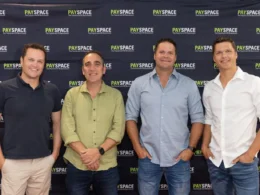
San Francisco’s founder residency landscape just got more interesting. Malaika Commons, a Marina District coworking space and community hub, has launched its 2026 cohort with a refreshingly straightforward pitch: $2,500 per month for four months gets you housing, programming, and full access to their ecosystem—with zero equity taken.
The program, announced by Panashe Sivindani, Head of Residency, Venture & Capital Programs, positions itself as “not a co-living experiment or a generic accelerator” but rather “a home base for global builders who want to ship, grow, and connect in San Francisco.” The emphasis on African and diaspora founders is explicit, addressing a persistent gap in SF’s startup infrastructure.
But buried beneath the equity-free model is an optional investment component that raises familiar questions about access, selection, and who really benefits.
The Core Offer: Straightforward and Founder-Friendly
At its foundation, Malaika’s residency is remarkably simple compared to the labyrinth of terms characterizing most SF accelerator programs:
Cost: $2,500/month for 4 months ($10,000 total)
What’s included:
- Private room in a furnished Marina District home with other founders
- Work environment with dedicated workspace setup, strong Wi-Fi, and quiet focus areas
- Weekly Founder Circles (progress check-ins, feedback, shared accountability)
- Access to Malaika Commons events (founder showcases, dinners, partner gatherings)
- Investor and partner introductions (personalized warm intros where fit aligns)
- Monthly demo days and “Ship It” sessions
- Stocked spaces (snacks provided)
Equity: 0%. You keep everything you build.
Commitment: Month-to-month. Decide by the 15th if you want to extend.
For context, $2,500/month for housing plus workspace in San Francisco’s Marina District—a safe, walkable neighborhood with parks, cafes, and Bay views—is competitive. A studio apartment alone in the Marina typically runs $2,800-3,500/month, before factoring in coworking space ($300-600/month), community access, or programming.
Who This Is For: African Founders Get Explicit Welcome
Unlike many SF programs that claim “global” reach but effectively cater to Stanford/Berkeley networks, Malaika explicitly targets:
1. Early or growth-stage startup founders ready to focus full-time on building
2. Global builders, with specific emphasis on diaspora and international founders moving to SF or scaling from abroad
3. Creative technologists: Makers, operators, and product minds who build and ship independently
The African founder focus is significant. Sivindani’s announcement specifically mentions that the program is “highly open to African founders,” addressing a real barrier: African entrepreneurs often struggle to break into SF’s insular networks despite strong products and traction.
“Most founders come to San Francisco looking for community but end up alone,” the program’s website notes. “Malaika Commons changes that. We bring together a small group of high-conviction founders under one roof to live, work, and grow together.”
The Investment Wild Card: Optional but Opaque
Here’s where things get murkier. While the core program is equity-free, Malaika offers an optional investment track that remains frustratingly vague:
The pitch: If “covering the cost is a burden but your idea is AMAZING, that’s not a blocker.” For selected founders, Malaika has “investors ready to invest in your startup and cover the fee.”
The terms: Up to $20,000 at a $1 million valuation (roughly 2% equity if taking the maximum)
The selection: Determined by unnamed investors based on idea quality
The transparency: Minimal. No investor names, no selection criteria, no historical acceptance rates.
This creates a two-tier system: founders who can afford $10K for the program get guaranteed access. Founders who can’t afford it but have “AMAZING” ideas might get investor-funded spots—but the decision-making process is completely opaque.
What Works: The Equity-Free Foundation
Malaika’s decision to keep the core program equity-free is genuinely innovative in a market dominated by accelerators taking 5-10% for similar programming.
The math for founders:
Traditional accelerator:
- Cost: Usually free upfront
- Equity: 5-10%
- Cash: Often $100K-150K
- Effective “cost”: $500K-1.5M at exit (assuming $10M exit)
Malaika residency:
- Cost: $10K upfront
- Equity: 0%
- Cash: $0 (unless selected for investment track)
- Effective “cost”: $10K period
For founders who already have some funding, traction, or savings, Malaika’s model is clearly superior—you’re buying access and community without mortgaging your cap table.
For bootstrapped founders or those from regions where $10K represents significant capital, the investor-funded path becomes the only option—reintroducing all the gate-keeping dynamics the equity-free model theoretically avoids.
The Marina District Advantage
Location matters in San Francisco, and Malaika’s Marina District positioning is strategic.
Why the Marina works for founders:
Safe and walkable: Unlike SoMa or Tenderloin, the Marina has minimal street crime and well-lit streets—critical for international founders unfamiliar with SF’s stark neighborhood disparities
Proximity to Fort Mason and Crissy Field: Walking/running paths for clearing your head during tough build sessions
Restaurant and cafe density: Places to take investor meetings that aren’t Starbucks
Easy access to downtown: 30-minute MUNI/bus ride to Financial District and SoMa
Residential vibe: Quieter than downtown, conducive to deep work
The trade-off: You’re not in the physical center of SF’s startup ecosystem. No walking to South Park for impromptu founder coffees or stumbling into a16z events. But for founders prioritizing heads-down building over networking theater, that might be a feature, not a bug.
The Accountability Structure: Weekly Check-ins and Monthly Demos
Malaika’s programming emphasizes consistent, public progress:
Weekly Founder Circles: Progress check-ins, feedback sessions, and shared accountability. Think of this as your weekly standup with peers who understand the emotional rollercoaster of building.
Monthly Demo Days: Mandatory presentations showcasing your progress. These aren’t optional—if you’re in the program, you’re presenting monthly.
“Ship It” Sessions: Regular deadlines forcing you to push code, launch features, or close deals. The specifics aren’t detailed, but the intent is clear: bias toward action.
This structure works brilliantly for certain founder types and products, and terribly for others.
Who thrives with this model:
- Consumer app founders with visible, iterative progress
- B2B SaaS builders with clear feature roadmaps
- E-commerce/marketplace founders with monthly GMV milestones
- Founders who are energized by external accountability
Who struggles:
- Deep-tech founders doing fundamental research (where monthly “progress” may look like failed experiments)
- Hardware builders with long manufacturing cycles
- Founders in regulatory-heavy industries (fintech, healthcare) where progress is gated by approvals
- Introverts who find frequent public presentations draining rather than motivating
The monthly demo cadence also creates a specific type of pressure: you’re not just building for users—you’re building for an audience of peers and potential investors evaluating your velocity. That can be galvanizing or paralyzing depending on your psychology.
The Community Bet: Does Forced Proximity Create Magic?
Malaika’s core thesis is that “it’s not about networking; it’s about belonging. You’ll share ideas over breakfast, refine decks with peers, and build in the same rhythm as others chasing bold goals.”
This is the hacker house dream: put smart, ambitious people in physical proximity and watch serendipity happen. Sometimes it works spectacularly (see: early Y Combinator, Stripe’s first office, the Paypal Mafia). Sometimes it devolves into a competitive pressure cooker or reality TV dynamics.
What makes founder co-living work:
Genuine peer quality: If you’re surrounded by builders as talented and driven as you, the energy is contagious. If you’re the strongest founder in the house, it’s demotivating.
Complementary skills: Best case, your housemates have expertise you lack (design, growth, sales, engineering) and you trade knowledge organically.
Aligned values: Startup approaches range from “growth at all costs” to “sustainable bootstrapping.” Mismatched philosophies create tension.
Respect for boundaries: The ability to go heads-down when needed, not pressure to socialize 24/7.
Malaika’s “small group of high-conviction founders” language suggests they’re curating for quality and fit—but the selection criteria remain undisclosed. In a fully paid model, selection is theoretically merit-based. In a hybrid model where some founders get investor-funded spots, selection introduces bias toward ideas that appeal to unnamed investors’ preferences.
The African Founder Angle: Addressing Real Barriers
The explicit focus on African and diaspora founders deserves emphasis. This addresses several persistent challenges:
1. Visa/relocation logistics: International founders often struggle to find SF housing without US credit history or co-signers. Malaika simplifies this with furnished, move-in-ready housing.
2. Network access: African founders frequently have strong products but lack intros to US investors. Malaika’s “personalized warm introductions where fit aligns” promises to bridge this gap—though execution will determine impact.
3. Cultural code-switching: SF startup culture has unwritten rules (the “casual” coffee that’s actually a pitch, the “just picking your brain” that’s investor diligence). Living with other international founders provides a peer group navigating the same learning curve.
4. Capital access: African startups raised $3 billion in 2025 (up 33% from 2024) but remain massively undercapitalized relative to US/European counterparts. Any programming that increases African founder access to Silicon Valley capital is meaningful.
The test: Does Malaika actually deliver investor intros that convert to term sheets, or is this another program that “opens doors” without tangible funding outcomes?
Sivindani’s background—including work on period poverty initiatives in Zimbabwe—suggests genuine commitment to African ecosystem building. But good intentions don’t guarantee effective execution.
What’s Missing: The Questions Malaika Needs to Answer
For a program positioning itself as transparent and founder-first, Malaika’s public materials leave critical gaps:
1. Investor network details
- Who are the investors “ready to invest”?
- What’s their track record with early-stage companies?
- How many founders per cohort actually receive investment?
- What happens if multiple founders want the same investor?
2. Selection criteria
- How does Malaika define “AMAZING” ideas?
- What’s the acceptance rate?
- What’s the demographic breakdown of admitted founders (geography, gender, sector)?
- Is selection transparent or subjective?
3. Historical outcomes
- If this is the “first 2026 cohort,” were there 2025 cohorts?
- What companies came through previous cohorts?
- Any exits, follow-on funding, or notable failures?
- Where are those founders now?
4. Investment mechanics
- If an investor covers your $10K fee and invests $20K, is that $30K at $1M valuation (3%) or $20K at $1M valuation (2%) plus a separate fee arrangement?
- Do investors get board seats, information rights, or pro-rata rights?
- What’s the follow-on expectation?
5. Community size and density
- How many founders per cohort?
- How many houses/units?
- What’s the ratio of residents to total Malaika Commons members?
Without this information, founders are making decisions based on vibes and marketing copy—exactly the dynamic Malaika claims to transcend.
The Competitive Landscape: Where Malaika Fits
San Francisco’s residency market is crowded. Here’s how Malaika compares:
vs. Y Combinator:
- YC: Free upfront, 7% equity, $500K, 3-month batch, world’s best network
- Malaika: $10K upfront, 0% equity (unless optional investment), 4-month flexible, smaller network
- Winner: YC for companies that can get in; Malaika for founders wanting to keep equity or needing more time
vs. HF0:
- HF0: Invitation-only, 0% equity, free, elite repeat founders
- Malaika: Application-based, $10K, open to first-timers
- Winner: HF0 for pedigree; Malaika for accessibility
vs. Antler:
- Antler: Free, ~9-11% equity, co-founder matching, structured validation
- Malaika: $10K, 0% equity, bring your own co-founder, flexible structure
- Winner: Antler for pre-idea founders; Malaika for founders with ideas/teams
vs. Afore Capital’s Founder-in-Residence:
- Afore: Free, equity varies, minimum $100K investment, South Park office
- Malaika: $10K, optional 2% for $20K investment, Marina housing
- Winner: Afore for serious capital; Malaika for community + flexibility
vs. Traditional SF Housing:
- Solo apartment: $2,800-3,500/month, no community, no programming
- Malaika: $2,500/month, community, programming, workspace included
- Winner: Malaika for founders prioritizing community; solo for those prioritizing privacy
Malaika’s niche appears to be founders with some runway who value community and want to preserve equity while getting SF ecosystem access—particularly international and African founders navigating US startup culture.
The $1M Valuation Question (For Those Taking Investment)
If you do opt into the investment track, the fixed $1 million valuation deserves scrutiny.
Is $1M fair?
For idea-stage, pre-revenue founders: Yes, arguably generous. You’re getting capital for pure potential.
For founders with traction: Potentially undervalues you. Pre-seed in 2026 typically ranges $3M-8M post-money for teams with early customers/revenue.
For founders with initial revenue: Likely undervalues you significantly.
The fixed valuation is clearly designed for simplicity and speed—no negotiation, no drama. But it also means Malaika’s investors might be getting exceptional deals on strong companies that could command higher valuations elsewhere.
The trade-off: You’re paying for certainty and speed. If you need capital NOW and don’t have time for a 2-3 month fundraise process, $20K at $1M might be worth taking, even if you could raise at $5M elsewhere with more effort.
Month-to-Month Flexibility: Genuinely Innovative
One of Malaika’s strongest features is the commitment structure: decide by the 15th of each month whether to extend.
Why this matters:
For founders with uncertain timelines: You’re building in public with monthly demos. Maybe you realize by month 2 that you need to pivot or that SF isn’t working. You can leave without burning relationships.
For founders testing fit: Not sure if you need the full 4 months? Try one month. Working? Extend.
For founders with external deadlines: Raising a round, awaiting a big customer decision, or timing a product launch? You can compress or extend your residency around those milestones.
Most residencies and accelerators require upfront commitment to the full program. Malaika’s flexibility recognizes that founder journeys are non-linear—you might need intense community for 2 months, then quiet execution time solo, then another month of community as you approach launch.
The downside: cohort cohesion suffers if people are constantly entering and leaving. The “build in the same rhythm” thesis requires continuity. Malaika will need to balance individual flexibility with group stability.
The Bottom Line: Who Should Apply?
Malaika is a strong fit if you:
- Are an African or international founder needing SF ecosystem access
- Have $10K in runway to invest in housing + community (or an “AMAZING” idea that might attract investor funding)
- Are at idea or early product stage (pre-scale)
- Thrive with structured accountability and public progress sharing
- Value community and belonging as much as (or more than) capital
- Want to preserve equity while getting accelerator-style programming
- Are building iterative products where monthly progress is visible
Malaika is the wrong fit if you:
- Already have strong US investor relationships and don’t need network access
- Are deep in stealth mode and can’t share progress publicly
- Find frequent demo/pitch cycles draining rather than motivating
- Are building deep-tech or long-cycle products where monthly “wins” are hard to demonstrate
- Need significant capital immediately (should target traditional VCs or larger accelerators)
- Prefer solo building over communal living
What Success Looks Like
For Malaika to prove its model works long-term:
Year 1: Get 2-3 companies per cohort to meaningful traction (customers, revenue, or significant follow-on funding)
Year 2: Create a self-sustaining alumni network where graduates mentor new cohorts and make intro connections
Year 3: Establish Malaika as a recognized brand in the “founder-first, equity-preserving” category alongside HF0
Year 5: Point to exits or major outcomes (acquisition, large rounds, public offerings) from early cohorts
The equity-free model means Malaika doesn’t capture financial upside from founder success—their incentive is pure reputation. If the program becomes known as “where serious African founders go to break into SF,” that brand value drives applications and creates a virtuous cycle.
If it becomes “pay-to-play coworking with homework,” it’ll quietly fade.
The Verdict: Cautiously Optimistic, With Caveats
Malaika’s 2026 launch arrives at an interesting moment. The venture market remains challenging, founder burnout is high, and the traditional accelerator model is showing cracks (high equity taken, commoditized programming, diminishing selection filters).
Into this environment, Malaika offers a genuinely different proposition: month-to-month flexibility, equity-free baseline, explicit welcome to underrepresented founders, and focus on community over extraction.
The optional investment track—with its unnamed investors and opaque selection—feels like a vestige of older, more hierarchical models. It’s the element that doesn’t quite fit with the “founder-first” positioning. Either lean fully into the equity-free, paid model or be radically transparent about the investment side.
For African founders specifically, Malaika addresses real pain points: access, housing, network, cultural navigation. If execution matches the vision, this could become essential infrastructure for the next wave of African companies going global.
For the broader founder community, it’s a test case: Can equity-free, paid residencies deliver value comparable to traditional accelerators? Or does removing the equity alignment also remove the incentive for programs to truly invest in founder success?
The recommendation: If you fit the target profile and have the $10K, Malaika is worth strong consideration—especially over solo housing + generic coworking. The structured accountability, curated community, and investor intros have real value even if the optional investment never materializes.
But go in with open eyes. Demand transparency about investor networks, selection criteria, and historical outcomes. Push for clarity on the investment mechanics if you’re considering that path. And remember: community can’t be manufactured—it emerges from authentic shared struggle and mutual respect.
Malaika has the positioning and structure to succeed. Execution will determine whether it becomes the next essential founder experience or another expensive experiment.
Apply: Applications for the 2026 cohort are open at https://bit.ly/Malaika-Residency
Disclosure: Neither TechMoonshot nor the author has any financial relationship with Malaika Commons, its investors, or affiliated entities.