President Bola Tinubu has ordered Nigeria’s competition watchdog to investigate Meta, Alphabet, X and a cluster of generative AI platforms over how they treat Nigerian news content. The directive, issued through Information Minister Mohammed Idris, tasks the Federal Competition and Consumer Protection Commission (FCCPC) with determining whether the companies broke the law by scraping, training on, and profiting from journalism they never paid for. It is the boldest move yet in Nigeria’s ongoing push to make global tech platforms answer to local rules.
The probe did not come out of nowhere. It follows a joint petition to the presidency from the Nigerian Press Organisation, an umbrella group representing the Newspaper Proprietors’ Association of Nigeria, the Nigeria Union of Journalists, the Broadcasting Organisations of Nigeria and the Guild of Corporate Online Publishers. Their complaint is straightforward: AI models are being trained on Nigerian reporting, and the outlets that produced it have not been compensated or even consulted.
Who the FCCPC Investigation Targets
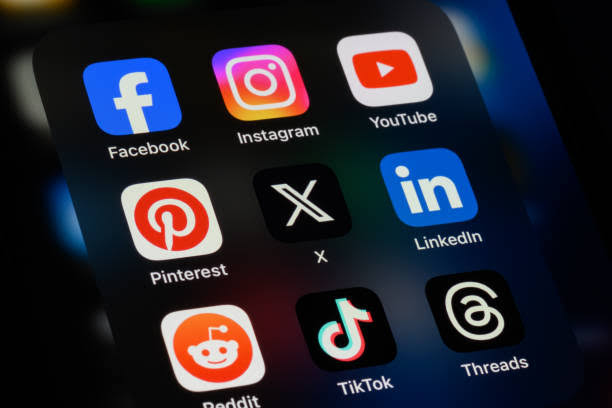
The FCCPC named Meta, Alphabet — Google’s parent company — and X, formerly Twitter, as primary subjects, alongside unnamed generative AI platforms operating in the country. The commission says it will determine whether these companies violated the Federal Competition and Consumer Protection Act of 2018. Two allegations sit at the center of the inquiry: abuse of market dominance, and the unauthorized extraction of copyrighted news material to train large language models.
A third allegation cuts closer to the media industry’s survival. Nigerian publishers argue the platforms have refused to open any negotiating table for compensation, leaving newsrooms with no path to a commercial agreement even as their journalism trains the systems replacing search traffic to their sites. That dynamic has already reshaped ad revenue for publishers everywhere, and Nigerian outlets say they are absorbing the damage without any of the leverage bigger markets have secured.
FCCPC Executive Vice Chairman Tunji Bello framed the investigation as fact-finding rather than prosecution. “This inquiry is not directed at any entity by presumption of wrongdoing,” he said, adding that all parties would get a chance to present their case before any conclusion is reached. Bello said the commission’s job is to keep Nigeria’s digital market “fair, transparent and consistent with Nigerian law.”
That posture of neutrality sits awkwardly next to the FCCPC’s recent track record. The commission spent much of the past year building out its enforcement muscle, and Nigeria’s data protection regulator alone collected ₦7.2 billion in penalties as it shifted from advisory warnings to active enforcement. Big Tech in Nigeria is no longer dealing with a paper tiger.
A Pattern of Escalating Enforcement
This is not the FCCPC’s first fight with Meta. In 2025, the commission secured a court judgment against the company over data privacy and consumer protection violations, resulting in a $220 million penalty that Meta has since appealed. That case established the commission’s appetite for going after the largest platforms operating in the country, and it set a financial precedent that Nigerian regulators are unlikely to walk back.
Meta is not the only global platform to draw Nigerian regulatory attention recently. Delivery app Glovo faced its own reckoning after a Nigerian food vendor accused it of enabling brand impersonation, a case that echoed the European Commission’s €329 million antitrust fine against the same company. Regulators across the continent are increasingly comfortable treating global platforms as subject to the same scrutiny local businesses face, not exceptions to it.
Nigeria is also not acting alone. The FCCPC pointed directly to South Africa, where the Competition Commission’s investigation into Google led to an agreement worth roughly R688 million — about $40 million — paid annually for three to five years to support the country’s news media. South Africa has run this playbook before in other sectors too: its consumer watchdog opened a formal investigation into Shein and Temu over alleged violations of the Consumer Protection Act, signaling that African regulators are increasingly willing to take on foreign platforms regardless of size.
The stakes are high because of how deeply these companies are embedded in Nigeria’s tech economy. Lagos alone has become a magnet for the same firms now under investigation, with Google, Microsoft and Meta all running innovation centers in the city as it climbed to the top of Dealroom’s 2025 Global Tech Ecosystem Index. Regulators must weigh accountability against the risk of souring relationships with companies that also bring investment, jobs and infrastructure to the country.
What Comes Next
The FCCPC has not published a timeline for the investigation, and Bello’s comments suggest the commission intends to move deliberately rather than rush to judgment. That caution cuts both ways. It protects the companies from a hasty finding, but it also means Nigerian publishers — many already squeezed by falling ad revenue and shrinking referral traffic — could wait months or longer for any resolution.
The bigger question is whether Nigeria has the enforcement capacity to match its ambition. Winning a $220 million judgment against Meta was a landmark, but the appeal remains unresolved, and collecting on penalties against companies with no physical assets in Nigeria has historically proven difficult for African regulators. If the FCCPC secures a compensation framework similar to South Africa’s Google deal, it would give Nigerian newsrooms a genuine revenue lifeline. If the probe stalls the way many high-profile Nigerian regulatory actions have before, it risks becoming another headline without a payout.
What happens next will also shape how AI companies operate across the rest of the continent. Nigeria’s market size and its willingness to litigate make it a bellwether. Other African regulators are watching to see whether a 220-million-person market can force generative AI platforms to the negotiating table — or whether Big Tech simply waits out the investigation and keeps training on African content for free.