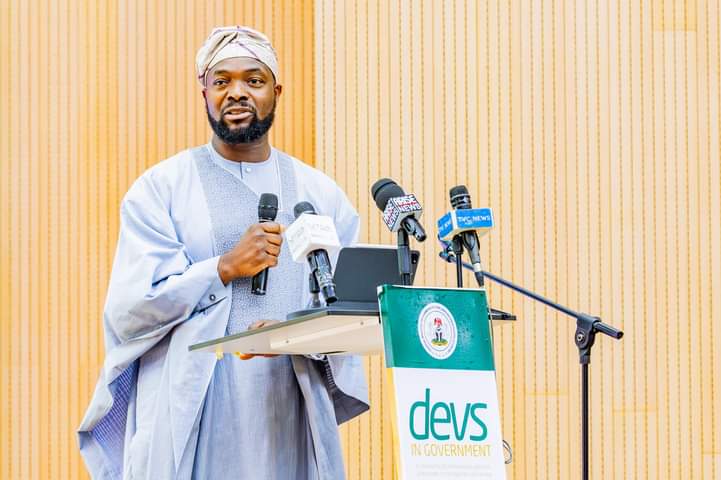


Lesotho has opened a five-day workshop in Maseru to begin drafting a National Artificial Intelligence Strategy and a Data Centre Blueprint, joining a growing cluster of Southern African nations moving to formalise how they will govern AI. The workshop, running from August 17 to 21, is organised by the Ministry of Information, Communications, Science, Technology and Innovation, working alongside the United Nations in Lesotho.
Caution Before Scale
Deputy Prime Minister Justice Nthomeng Majara delivered the keynote address and set a deliberately unhurried tone. She called for a cautious, strategic approach to AI development, urging the country to assess its existing capabilities and put safeguards, infrastructure, policy, and human capacity in place before scaling any AI investment. That is a notably different posture from the funding-announcement wave sweeping much of the continent, where governments have moved fast to attract international AI infrastructure capital, including the UAE’s billion-dollar commitment to African AI infrastructure unveiled at the G20 last year.
Minister Nthati Moorosi used the session to outline what groundwork Lesotho has already laid. More than 100 stakeholders were brought together in 2025 to validate an Artificial Intelligence Policy, a Data Management Policy, and a Broadband and Shared Infrastructure Policy, according to the ministry. The strategy now under development is meant to convert those separate policy documents into a single operational framework covering governance, capacity building, and sectoral AI deployment.
A Country Building Policy Before Infrastructure
Lesotho’s approach stands out precisely because it is sequencing policy ahead of hardware. Landlocked and with one of the smaller economies in the Southern African Development Community, the country does not have the fibre backbone, power capacity, or existing tech workforce that regional leaders such as South Africa or Kenya can draw on. Pairing a national AI strategy with a data centre blueprint in the same workshop signals that Lesotho’s government understands AI ambitions collapse without the physical infrastructure to run them on, a lesson Africa’s broader AI infrastructure deficit has made painfully clear across the continent, where under 1% of global data centre capacity currently sits.
Lesotho is not alone in moving now. Mozambique unveiled a draft national AI strategy for public comment earlier this year, and pan-African body Smart Africa has been pushing a Model AI Policy Framework aimed at the roughly 70% of African nations that still lack any national AI strategy at all. Neighbouring South Africa, by contrast, has spent six years on its own draft policy and is still working toward Cabinet approval, a reminder that a policy launch and a finished, enforceable framework are very different milestones.
The Gap Between Ambition and Capacity
The honest risk in Lesotho’s plan is not the sequencing, which is sound, but the resourcing. Writing a coordinated AI strategy is a fraction of the work; funding data centre construction, training a domestic AI workforce, and maintaining reliable power and connectivity for that infrastructure over years is a far larger commitment, and one that has stalled bigger, better-resourced African governments before. Principal Secretary Kanono Ramashamole has previously argued that developing nations need support to participate in AI as co-creators rather than only consumers, a fair point, but one that puts pressure on international partners like the UN and KOICA-style development agencies to follow through with implementation funding rather than workshop facilitation alone.
There is also a governance question worth watching closely. A data centre blueprint developed alongside an AI strategy will inevitably raise decisions about where that infrastructure is hosted, who owns it, and what data sovereignty protections apply, questions that have shaped digital infrastructure debates elsewhere on the continent, including Rwanda’s recent AI partnership arrangements. How Lesotho answers them will determine whether this week’s workshop produces a strategy the country can actually execute, or another policy document that outpaces the infrastructure and funding needed to bring it to life.
What to Watch
The workshop concludes August 21, after which the ministry is expected to move toward drafting the formal strategy document for further stakeholder validation. The timeline for finalising both the AI strategy and the data centre blueprint has not yet been made public, and neither has a funding commitment to build the infrastructure the plan will eventually call for.