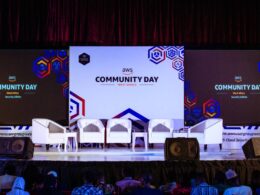
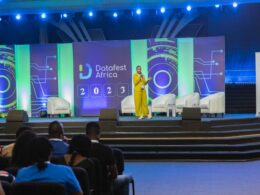
Here are some major tech events that are converging on the African tech calendar this June — and the stakes behind each of them are higher than the marketing suggests.
From a petroleum engineers’ gathering rebranding itself as an energy innovation forum in Abidjan, to an enterprise expo in Lagos chasing nearly a billion dollars in deal activity, June 2026 is one of the busiest conference months the continent has seen. For founders, enterprise executives, and policy players trying to decide where to be, understanding what each event actually delivers — and for whom — matters more than the headline numbers.
Africa Technology Conference, Abidjan — Energy Meets Innovation
The Society of Petroleum Engineers (SPE) Africa kicked off May with the official programme announcement for the second Africa Technology Conference (ATC 2026), running June 16–18 in Abidjan, Côte d’Ivoire. The event travels to West Africa for the first time, following a 2025 debut in Tanzania that drew over 400 delegates from more than 25 countries.
The theme — “Harnessing Innovation and Technology for a Resilient and Sustainable African Energy Sector” — signals a deliberate pivot beyond traditional petroleum audiences. Côte d’Ivoire’s Minister of Mines, Petroleum and Energy, Mamadou Sangafowa Coulibaly, confirmed his participation and will deliver the opening keynote, lending the event significant government weight in one of West Africa’s fastest-growing energy markets.
ATC 2026 introduces a new sub-event: the Africa Gas and Innovations Summit, targeting energy security, gas infrastructure, and the role of digital technologies in unlocking sustainable development. For startups at the intersection of energy and technology — cleantech, IoT-enabled grid management, digital oilfield systems — this is a room that rarely opens this wide to non-oil-company actors.
The risk, as with any sector conference hosted under an industry body, is capture. When the Society of Petroleum Engineers convenes policymakers and energy executives in the same room, the agenda tends to reflect incumbent interests. Founders should enter with eyes open to the power dynamics at play — and with a clear pitch for why technology serves the public interest, not just the operator’s cost structure.
Africa Technology Expo, Lagos — The Enterprise Play
The Africa Technology Expo (ATE) returns to the National Theatre in Lagos on June 26–27, scaling from last year’s one-day format to a two-day programme for the first time. Organisers are projecting more than 6,000 technology leaders, C-suite executives, and policymakers in attendance — and claiming a target of $890 million in potential ecosystem deal activity across partnerships, investments, and enterprise contracts.
That $890 million figure deserves scrutiny. The previous edition reportedly facilitated an estimated $198 million in partnerships and MOUs — a number that itself carries the usual caveats about how “facilitated deal activity” gets counted at conferences. Whether June’s event translates intent into signed agreements depends, as always, on deal quality and follow-through. But the directional ambition is real: ATE is positioning itself as the single largest enterprise boardroom for African technology.
What distinguishes this year’s edition is a deliberate hard-tech focus. The exhibition floor will showcase robotics, IoT, connectivity infrastructure, and enterprise digital solutions — sectors that, as TechMoonshot has reported, remain chronically underfunded in a continent where software startups have dominated every major funding cycle since 2019. The expo also includes a live pitch component tied to the Breet Builder Grant, where two fintech and crypto founders will share $10,000 in equity-free funding after pitching to investors on June 27.
Executive roundtables and keynote sessions round out the programme. The speaker roster confirmed so far includes Dr. Ayotunde Coker, Dr. Vincent O. Olatunji, and Dr. Toyosi Akerele-Ogunsiji, among others — a mix of technology executives, data protection leadership, and development sector voices that reflects ATE’s cross-sector ambitions.
For founders considering whether to attend, the calculus is straightforward: ATE is an enterprise play, not a seed-stage showcase. The deal flow is corporate and institutional. Startups that show up without a B2B enterprise product and a credible revenue story risk being outpaced by the multinational exhibitors who dominate the floor.
The Bigger Picture: What June’s Calendar Reveals
Read together, June’s two major in-country conferences expose something important about where African tech events are evolving. ATC in Abidjan is a sector specialist event testing whether energy transformation language can open doors beyond traditional petroleum circles. ATE in Lagos is a volume play — betting that scale, enterprise focus, and deal facilitation can fill the gap left by Africa’s slowing venture capital activity.
Neither event is primarily for early-stage founders. Both are structured around institutional deal-making, enterprise adoption, and policy alignment. That is not a criticism — it reflects the maturation of Africa’s tech ecosystem, where the biggest funding rounds increasingly involve debt, blended finance, and corporate partnerships rather than pure venture equity.
What the June calendar still lacks is a dedicated, high-quality seed and early-stage founder event in West Africa — the kind of gathering where a pre-revenue startup with a working product and a clear market thesis can compete for capital on merit. Africa Tech Summit in Nairobi has built that format for East Africa over nine editions. The West African equivalent remains an open market.
For ecosystem builders, that gap is both a problem and an opportunity.