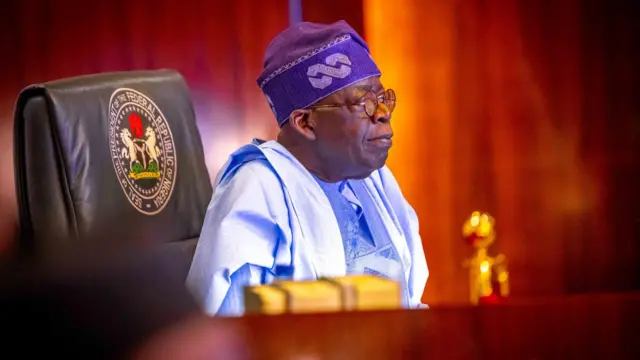
President Bola Tinubu signed the Presidential Executive Order on Virtual Assets Coordination, 2026, on Friday, handing the Central Bank of Nigeria the chair of a new council built to stop the country’s financial regulators from working at cross purposes over crypto. The order took immediate effect. It does not create a new regulator. Instead, it forces the CBN, the Securities and Exchange Commission, and the Nigeria Revenue Service to share one supervisory playbook for cryptocurrencies, stablecoins, and tokenised assets.
Bayo Onanuga, the president’s Special Adviser on Information and Strategy, disclosed the signing in a statement issued Friday. He said the order responds to a regulatory environment that has grown fragmented as virtual assets increasingly blur the line between currencies, securities, commodities, and payment systems. Onanuga said agencies had been “operating in silos,” leaving gaps that unregistered platforms exploited to defraud Nigerians and that exposed the country to money laundering, terrorism financing, and lost tax revenue.
Nigeria has spent years lurching between crypto crackdowns and cautious openness. The CBN barred banks from servicing crypto exchanges in 2021, then began reversing that stance under Governor Olayemi Cardoso. The Investments and Securities Act 2025 changed the legal terrain entirely by classifying virtual assets as securities and handing the SEC clear licensing authority over exchanges, custodians, and wallet providers. Friday’s executive order builds on that law rather than replacing it, wiring the SEC’s mandate into a shared system with the CBN and the newly formed Nigeria Revenue Service.
Who Sits on the New Virtual Asset Council
The council will be chaired by the CBN, with the Nigeria Revenue Service and the SEC serving as vice-chairs. The Nigerian Financial Intelligence Unit and the Office of the National Security Adviser round out the membership. Onanuga said the council will set policy direction, strengthen inter-agency cooperation, and work with the Attorney-General of the Federation to build a harmonised legal framework for the sector.
A new Virtual Asset Office, domiciled inside the CBN, will function as the council’s day-to-day secretariat. It is expected to coordinate information sharing, process licensing applications, and manage regulatory reporting across the participating agencies, backed by a shared supervisory technology platform. The Presidency was explicit that each agency keeps its statutory powers. “Each institution retains its full statutory mandate and independence, and the framework coordinates their work rather than replacing it,” the government said in its statement.
On registration specifics, activities involving securities will continue to be licensed by the SEC. Payment, settlement, and custody functions fall elsewhere in the framework, an allocation that mirrors how Nigerian regulators have handled licensing disputes with fintech operators in the past, where unclear jurisdiction left room for unregistered platforms to operate in the gaps.
A Familiar Playbook for a Fast-Moving Market
Nigeria consistently ranks among the world’s most crypto-active markets, and that scale is precisely what has made fragmented oversight so costly. Unregistered platforms have repeatedly used regulatory ambiguity to defraud users, a pattern this order is designed to close. The $250 million fraud judgment against Dozy Mmobuosi’s Tingo Group remains the starkest recent example of how far a bad actor can run before enforcement catches up.
The order also signals where Nigeria wants the innovation side of the ledger to go. The CBN is expected to detail a regulatory sandbox in the coming weeks, and the Revenue Service plans to issue a dedicated tax policy clarifying how existing tax law applies to digital assets. The government is also finalising a Virtual Assets White Paper meant to set out longer-term policy direction. Stablecoin-linked payment infrastructure, the kind companies like HoneyCoin have built to move money across African corridors, stands to benefit most directly from clearer rules on custody and settlement.
Coordination on paper is not the same as coordination in practice. Nigeria’s regulators have a history of issuing overlapping or contradictory guidance, and the new council’s authority rests on voluntary cooperation between agencies that keep their independent mandates. Nothing in the order compels the CBN, SEC, and Revenue Service to resolve disagreements quickly, and the statement is silent on what happens if one agency stalls a joint decision. For founders building compliant crypto products, the practical test will be whether the Virtual Asset Office actually shortens licensing timelines, or simply adds a new coordination layer on top of the SEC’s existing VASP process.
The order arrives as Nigeria works to stay off the Financial Action Task Force’s grey list, a pressure that has pushed several African governments toward binding crypto legislation over the past eighteen months rather than the ad-hoc circulars of the past. Whether Nigeria’s version proves more durable than earlier attempts will depend on execution inside the Virtual Asset Office, not on the text of the order itself.