Paymob has raised $35 million in a pre-Series C round co-led by Mubadala Investment Company and the European Bank for Reconstruction and Development, pushing the Egyptian payments infrastructure provider’s total disclosed funding past $125 million. The round, which also drew British International Investment, Global Ventures and DPI Ventures, lands as Paymob’s growth story tilts harder toward the Gulf than toward the Egyptian market where it was built.
The Raise, and Who’s Backing It
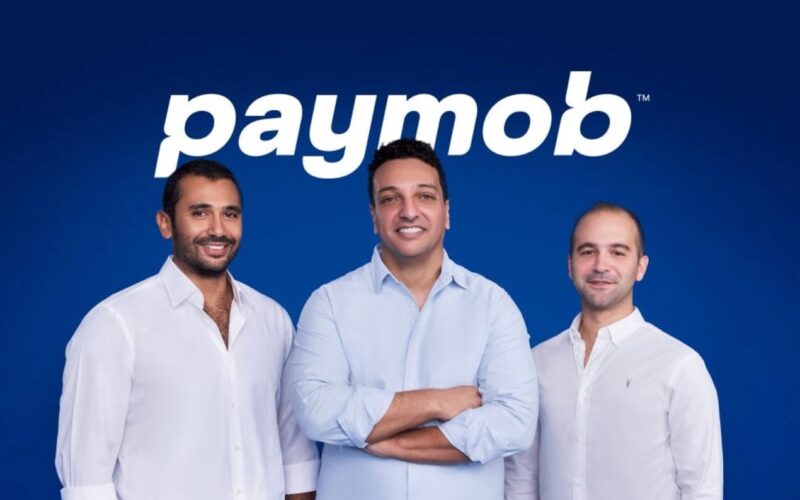
Mubadala, the Abu Dhabi sovereign investor, joins Paymob’s cap table for the first time, sitting alongside existing backers PayPal Ventures, Kora Capital, Clay Point, FMO and A15. EBRD returns to the table two years after leading a $22 million extension to Paymob’s Series B in 2024, which followed a $50 million Series B in 2022 led by Kora Capital, PayPal Ventures and Clay Point. Paymob was founded in 2015 by Islam Shawky, Alain El Hajj and Mostafa Menessy, and now says it serves more than 390,000 merchants across Egypt, the UAE, Saudi Arabia and Oman, up from roughly 350,000 when it last closed funding in 2024.
A Gulf Story Wearing an Egyptian Label
The numbers behind the round explain the pivot. Consolidated revenue across Paymob’s four markets has tripled over the past 18 months, but revenue from the Gulf Cooperation Council region has grown sevenfold in the same period and now accounts for close to half of total income. Since securing a Retail Payment Services licence from the Central Bank of the UAE in January 2025, Paymob has onboarded around 20,000 merchants across its three GCC markets. Co-founder and CEO Islam Shawky said the company “morphed into a regional platform over the past 18 months, propelled by the exponential growth of our GCC business.”
Paymob will use the new capital to scale its digital payments acceptance business across MENA and to build new products for SME merchants, including tools aimed at what it calls agentic commerce — payments initiated or managed by AI agents rather than humans clicking checkout buttons. That framing puts Paymob in a race several fintechs are already running, betting that merchant infrastructure needs to be ready before agentic transactions become common rather than after.
Why Fragmentation Is Paymob’s Real Pitch
Paymob’s core sell to merchants is consolidation. Businesses operating across the region typically juggle seven or eight separate payment methods — buy-now-pay-later providers, local card networks, bank instalment schemes — each requiring its own integration, contract and settlement process. Paymob claims to fold access to more than 60 payment methods into a single API, contract and dashboard, a proposition that matters more in markets like Saudi Arabia and the UAE, where payment method sprawl is a genuine operational headache for merchants expanding across borders.
The Uncomfortable Question for an Egyptian Fintech
Paymob’s roots are in Cairo, and its “Egypt-founded” tag remains part of every press release describing this round. But when nearly half of a company’s revenue now comes from a region it entered only in 2023, the label starts to do more branding work than descriptive work. Egypt’s currency volatility and capital controls have pushed several homegrown fintechs to chase dollar-denominated Gulf revenue in recent years, and Paymob’s trajectory reads as a case study in that shift rather than an exception to it. The risk is that a raise pitched as MENA expansion quietly becomes a story about a company outgrowing its home market’s macroeconomic constraints — good for investors chasing GCC multiples, less clearly good for Egyptian merchants who were Paymob’s original customer base.
Competition is also not standing still. Fawry remains entrenched in Egypt’s payments stack, while Gulf-based players like Tap Payments and PayTabs are fighting for the same SME merchants Paymob is now courting with fresh capital. A pre-Series C round, rather than a full Series C, also suggests investors wanted more operating history in the GCC before committing to a larger, more expensively priced round.
What to Watch Next
The next signal worth tracking is whether Paymob’s GCC revenue share keeps climbing past the halfway mark, and whether that shift shows up in where the company chooses to headquarter its next major product launch — a decision that would say more about its long-term identity than any funding announcement can.