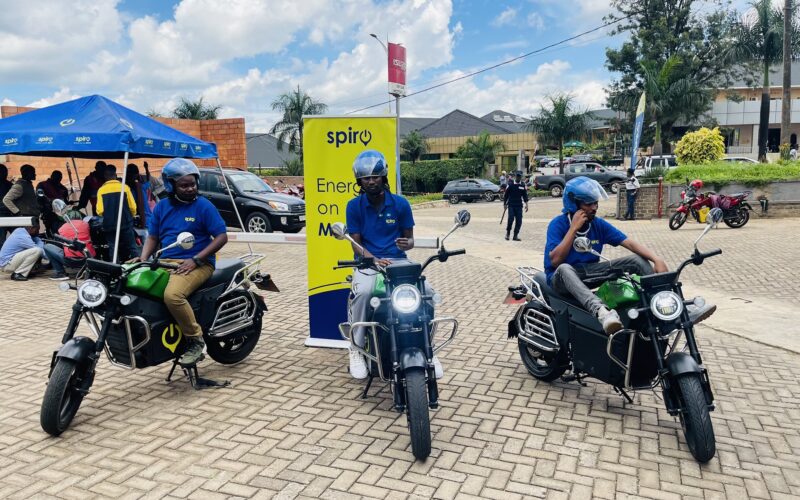
Africa Go Green Fund has doubled its bet on Spiro, injecting an additional $18 million into the electric mobility company and taking its total debt commitment to $36 million. The follow-on financing, announced this week, builds on a facility the fund closed with Spiro in December 2025 and signals that African e-mobility’s biggest debt backers are still willing to write bigger checks less than a year in.
A Fast Follow-On, Not a Fresh Deal
Africa Go Green Fund (AGG), managed by Cygnum Capital, structured the original $18 million tranche alongside a $7 million contribution from climate fintech lender Nithio in December 2025, with AGG acting as investment structuring lead. This time, AGG went alone, adding its capital directly onto the existing facility rather than opening a new one. Laurène Aigrain, AGG’s managing director, said the decision to go deeper reflected the fund’s confidence in Spiro’s trajectory since the first check, describing the company’s ability to cut emissions while lowering costs for riders as solving “two critical challenges at once.”
That framing matters for a fund built specifically around climate-linked debt. AGG holds $232 million in committed capital earmarked for industrial energy efficiency, clean transport, green housing and sustainable appliances across the continent, and its capital base was itself topped up in August 2026 by a $20 million loan from Swedfund, Sweden’s development finance institution. Swedfund directed 13 of its 15 new investments in 2024 — $229 million of $249 million in total commitments — toward African markets, underscoring how much of this financing chain runs through DFI money rather than commercial equity.
Spiro’s Scale Case
Spiro says it has deployed more than 135,000 electric motorcycles and completed over 50 million battery swaps across seven African countries as of September 2026, running more than 2,500 swap stations and assembly facilities in Uganda, Kenya, Nigeria and Rwanda. The company has also rolled out mega battery-swap stations in Kenya and Rwanda as it tries to build the station density that makes swapping, rather than plugging in, a viable habit for riders.
The new $18 million is earmarked specifically for Uganda and Rwanda, where Spiro plans to deploy more motorcycles and expand its swap network. Group CEO Anant Badjatya said the priority in both markets is “to build network density, improve accessibility and make the switch to electric mobility increasingly practical and compelling for riders.” Founder Gagan Gupta called the renewed commitment “a powerful vote of confidence” in a model built, in his words, around the realities of African markets.
Debt, Not Equity, Still Carries a Bill
The distinction matters. AGG’s money is debt, not equity, which means Spiro now owes more than $36 million in obligations to a single climate lender on top of whatever it owes Nithio — a structure that rewards steady cash flow more than it forgives a slow ramp. Battery-swapping models live or die on utilization: swap stations that sit half-full in Uganda’s or Rwanda’s smaller towns cost the same to run as ones that turn over dozens of times a day in Kampala or Kigali. Spiro is also not alone in the region. Ampersand has built a strong swap network in Rwanda, and Roam has pushed further into Kenya’s motorcycle and bus segments, meaning the density Badjatya is chasing has to outpace rivals making the same bet with the same DFI-heavy capital pools.
There’s a broader question sitting underneath the good news, too. AGG only reinvests, Aigrain effectively conceded, when a first bet “has clearly proven to be successful” — which is a reasonable underwriting standard for a climate fund, but also a reminder that Spiro’s expansion is being financed one validated milestone at a time rather than through a large equity round that would give it room to absorb a bad quarter. For a company that positions itself as the continent’s largest electric-motorcycle operator, that dependence on serial debt tranches from a small pool of climate-focused lenders is a structural constraint worth watching as it tries to scale into new East African markets.
What to Watch Next
The real test will be whether Uganda and Rwanda’s swap-station density reaches a point where AGG’s third check, if there is one, comes attached to commercial terms rather than concessional climate financing — a sign that Spiro’s unit economics, not just its emissions story, have convinced the market.