



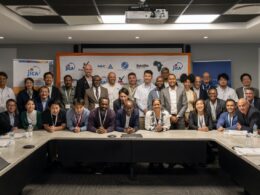
Google has announced the 15 startups joining the 10th cohort of its Google for Startups Accelerator: Africa — a milestone edition that marks eight years of the program and signals a deliberate shift toward deeper, research-driven AI infrastructure rather than the consumer-facing digital tools that defined earlier classes.
The cohort was chosen from nearly 2,600 applications, with an acceptance rate of less than 1%. Nigeria leads the country count with four selections, followed by Kenya with four, South Africa with two, and additional startups from across the continent rounding out the 15.
The program runs from April 13 to June 19, 2026, in a hybrid format combining remote learning with in-person sessions. It remains equity-free — a design choice that has defined the accelerator since its 2018 launch and one that matters considerably in an ecosystem where founders already face significant dilution pressure from early-stage capital.
Nigeria’s Four and What They’re Building
Four Nigerian startups — Bani, MasteryHive AI, Regxta, and Termii — were selected from the nearly 2,600 applications, representing some of the country’s deepest AI infrastructure plays to date.
Bani is building cross-border payments infrastructure aimed at eliminating settlement delays that continue to plague African businesses trading internationally. It is a well-trodden problem — the Africa cross-border payments gap has been estimated at hundreds of billions of dollars annually — but Bani’s bet is that infrastructure-layer solutions rather than consumer-facing wallets will win. MasteryHive AI is focused on automating transaction reconciliation, fraud detection, and anti-money laundering monitoring — a combination that positions it directly against both legacy compliance vendors and the growing number of fintech-native AML tools emerging across the continent.
Regxta combines alternative data-driven credit scoring with a hybrid digital-agent distribution model to deliver financial products to unbanked micro businesses. The alternative credit scoring approach has attracted significant attention across African fintech — and significant skepticism about whether behavioral and transactional proxies can substitute reliably for formal credit history at scale. Regxta’s inclusion in the cohort suggests Google’s reviewers believe the model has technical legs. Termii, an AI-native communications infrastructure platform, ensures reliable financial messaging for banks and fintechs — the kind of foundational plumbing that rarely makes headlines but underpins every OTP, payment alert, and fraud notification across the financial stack.
Gbolade Emmanuel, Termii’s CEO, told reporters that the accelerator is helping the company accelerate its AI roadmap and scale globally, and that even in the first week, access to technical support and insights has been valuable for its next phase of growth.
Kenya’s Four and the Informal Economy Play
Kenya’s four selections — Coamana, Duck, ReportsAI, and VunaPay — reflect a consistent theme: using AI to make visible what the formal economy has historically refused to see.
Coamana builds technology that helps governments and market associations digitize informal food markets. Africa’s informal food trade is enormous — the World Bank has estimated that informal markets account for the majority of food distribution across Sub-Saharan Africa — yet these markets remain almost entirely absent from the data infrastructure that governments and investors use to make decisions. Coamana’s pitch is that making informal markets legible creates compounding downstream value across credit access, supply chain planning, and policy design.
Duck is a real-time data intelligence platform giving consumer brands instant shop floor visibility to prevent stockouts. The distribution and visibility problem in African retail is chronic — brands routinely lose significant revenue to stockouts at the last mile — and Duck is betting that real-time shelf intelligence is the intervention point. ReportsAI helps impact organizations turn raw data into institutional knowledge and compliance-ready reporting through an AI-first platform, targeting the NGO and development finance sector whose reporting burden is substantial and whose data infrastructure is often surprisingly weak given the scale of capital they manage. VunaPay rounds out Kenya’s cohort with a payments focus.
South Africa’s Language Play
South Africa’s two selected startups — Loop and Vambo AI — are applying artificial intelligence to local and regional challenges, from transport and payments to language accessibility in digital systems.
Loop focuses on digitising mobility and payments, aiming to simplify how people and businesses access transport and financial services. Vambo AI is the selection that deserves the most attention: the startup is building multilingual AI infrastructure to support translation, speech, and generative AI across African languages — an area that remains significantly underrepresented in global AI systems. The African language AI gap is well documented. Most large language models perform poorly in indigenous African languages, not because the languages are technically intractable but because training data has historically not been collected, curated, or prioritized. Vambo AI’s selection signals that Google’s own teams see African language AI as a serious infrastructure problem worth backing at the accelerator level.
What Class 10 Is Actually Saying
Folarin Aiyegbusi, Head of Startup Ecosystem for Africa at Google, described the 2026 cohort’s focus as turning participating startups into “the research labs of the continent,” with AI infrastructure and health and societal benefit as the primary frame. That language is a departure from the transactional framing that characterized earlier classes, where the emphasis was on helping startups reach more users faster.
The structural benefits remain the same: selected startups receive up to $350,000 in Google Cloud credits, technical mentorship from Google engineers and AI experts, and access to global investors, partners, and collaborators. Class 10 adds Cloud TPU access — specialized hardware for machine learning research — which matters considerably for startups building model-level AI rather than API-wrapper products.
Since launching in 2018, the accelerator has supported 106 startups across 17 African countries, with alumni collectively raising over $263 million and creating more than 2,800 jobs. Those numbers tell a reasonable success story, though they also raise the question that any accelerator program eventually faces: how many of those funded startups are still operating, growing, and generating returns for founders and investors rather than quietly winding down?
The honest answer is that Google does not publish attrition data for accelerator alumni. The $263 million raised figure and 2,800 jobs number are cumulative and do not distinguish between startups that used the program as a genuine inflection point and those for whom it was a prestigious line item on a deck that ultimately did not convert. That accountability gap is not unique to Google — it is endemic to accelerator reporting globally — but it is worth naming as the program enters its second decade.
What Class 10 does clarify is Google’s read on where African AI is heading. The company’s own framing positions the accelerator as a high-tech laboratory, with selected startups gaining access to Google’s research expertise and specialized hardware to remove infrastructure barriers and allow founders to focus on their science and products. The informal market digitization plays from Kenya, the language infrastructure bet from South Africa, and the financial stack deepening from Nigeria’s four selections all point toward the same conclusion: the next phase of African AI is not about building faster consumer apps. It is about building the infrastructure layers — payments rails, language models, market data systems, compliance engines — that determine whether African founders build on African foundations or remain dependent on infrastructure built for other markets.
That is a harder problem than it sounds. It is also the right problem to be working on.




Comments 1