Data Science Nigeria, The People Practice, and the Federal Government’s 3 Million Technical Talent programme brought fellows, mentors, and employers into the same room in Lagos for a single question: can Nigeria’s biggest tech-training bet actually produce jobs, not just certificates. The event, held under the banner “Positioning Nigeria for the Future of Work” at the Four Points by Sheraton in Lagos, doubled as a showcase for the DeepTech_Ready upskilling programme, the data science and artificial intelligence track that 3MTT runs in partnership with Data Science Nigeria and Google.org.
The gathering pulled together an unusual mix for a talent-development event. NITDA, Google.org, WES Online, and the AI recruitment platform Loubby all had their logos on the step-and-repeat, alongside DSN and The People Practice. That lineup reflects what DeepTech_Ready has become since it launched in early 2025: a training pipeline with real government backing, chasing a placement problem that most African upskilling programmes never solve.
Why DeepTech_Ready Matters Beyond the Classroom
DeepTech_Ready sits inside 3MTT, the federal government’s three-million-technical-talent programme, and is built specifically around advanced data science, machine learning, and AI skills rather than general digital literacy. Google.org backed the track with a grant reported at roughly N2.8 billion, part of a wider $5.8 million commitment to African digital transformation, and the programme runs in six-month cohorts combining self-paced learning with on-site, project-based immersion.
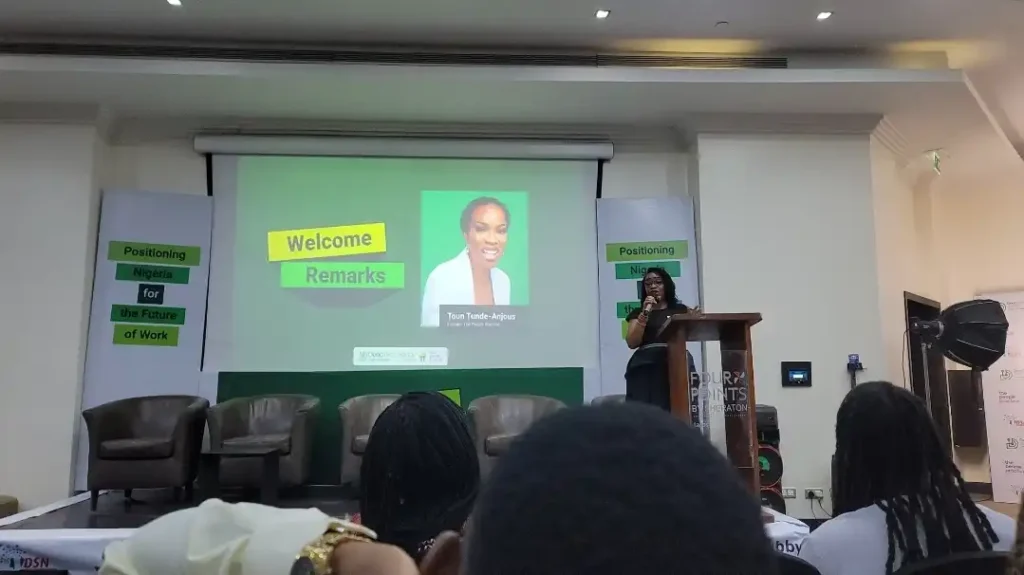
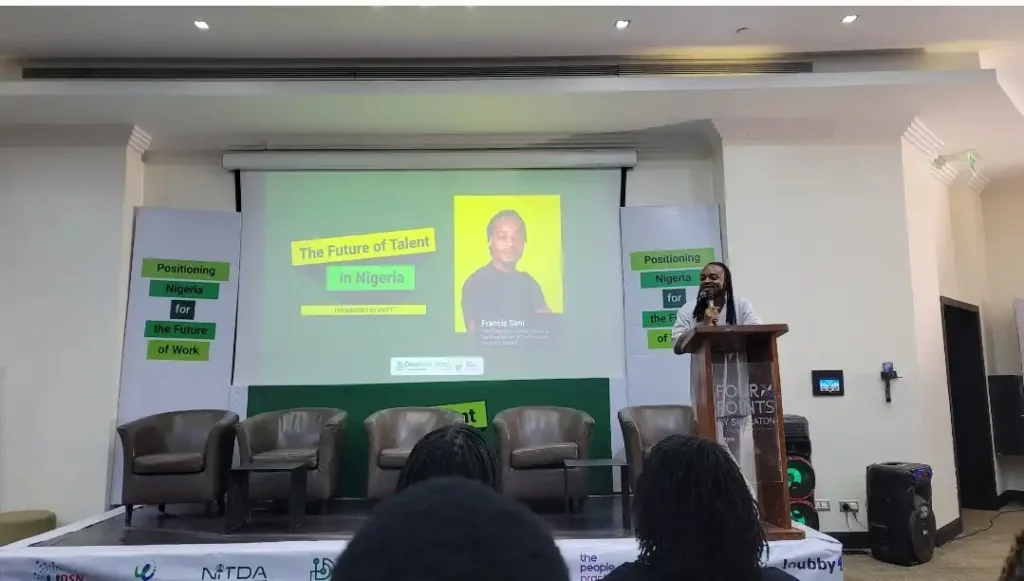
That structure is why Lagos’s event mattered more than a typical graduation ceremony. Toun Tunde-Anjous, founder of The People Practice, opened with welcome remarks that framed the day around readiness rather than certification, a distinction 3MTT has faced public scrutiny over as cohort numbers climb into the tens of thousands. Francis Sani, 3MTT’s Programme Director and Technical Adviser to the Honourable Minister of the Federal Ministry of Communications, Innovation and Digital Economy, followed with a session titled “The Future of Talent in Nigeria,” walking the room through where 3MTT sits inside the government’s broader digital economy strategy.
The Mentorship Gap Nobody Talks About
Dr. Roti Balogun took the stage to make what organisers billed as “the case for mentors,” arguing that Nigeria’s talent pipeline breaks down less at the training stage and more at the point where fresh graduates need someone senior enough to vouch for them. It is a familiar complaint inside Nigeria’s tech ecosystem, one echoed by platforms like Utiva, which has placed 90,000 of the 200,000 people it trained into paying tech roles by building employer relationships alongside its curriculum, not after it.
The panel that followed, titled “The Talent Shift,” pressed that point further. Eliezer Ajah, who leads Job Creation and Placement for 3MTT nationally, sat alongside fellow panellists to debate how Nigeria moves fellows from training completion into actual employment. Ajah’s presence on the panel is notable: his placement mandate is effectively 3MTT’s answer to the criticism that has trailed government-backed talent programmes since 3MTT launched, that training at scale means little if graduates cannot find work in a domestic tech market still working through its own slowdown.
What the Fellow Showcase Revealed
The programme closed with a Fellow Showcase, giving DeepTech_Ready participants a platform to present what they had built during the cohort. It is the part of these events that photographs well and says the least about outcomes. The harder number to get, and one 3MTT has not consistently published at the cohort level, is how many DeepTech_Ready graduates hold paying roles six or twelve months after completion, and how many are competing for the same shrinking pool of local vacancies that programmes like Airtel’s NextGen fellowship and Airtel Africa’s own 3MTT-linked training commitments are also feeding.
That accountability question sits underneath every session Nigeria’s Ministry of Communications, Innovation and Digital Economy runs on this topic. Lagos was just named the world’s fastest-growing tech ecosystem for 2025, a headline that sits awkwardly next to a domestic job market that has not obviously scaled hiring to match the pace of 3MTT’s cohorts. Positioning Nigeria for the future of work will take more than showcases and mentorship panels. It will take employer demand that grows as fast as the fellow numbers do, and a public accounting of how many of DeepTech_Ready’s graduates are actually working in the field they trained for.