ARC Ride has raised $33.3 million in equity and debt to expand its battery-swapping network for electric motorcycles beyond Kenya into Ghana, South Africa, Tanzania, and Uganda. Novastar Ventures and Norrsken22 led the round, with the International Finance Corporation, British International Investment, and French development finance institution Proparco joining as investors. Existing backers Musashi Seimitsu, a Japanese Tier-1 automotive supplier, and African impact investor Talanton also put in more capital.
The debt portion came through BII’s Kinetic programme and Mirova, the sustainable investment manager affiliated with Natixis. That structure, a mix of equity for technology and market expansion and debt for hard assets, reflects how capital-intensive it is to build swap infrastructure that can survive years of daily use.
Why a Battery-Swapping Startup Needs $33.3M to Cross One Border
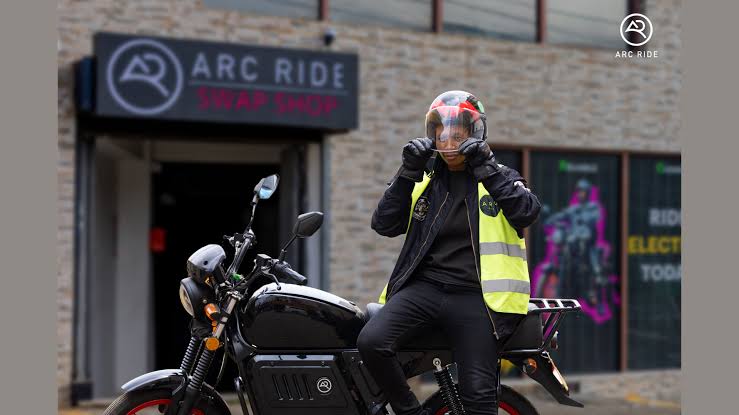
Nairobi-based ARC Ride runs a battery-as-a-service model. Riders exchange depleted batteries for charged ones at swap stations instead of buying and maintaining batteries themselves, which lowers the upfront cost of switching from petrol motorcycles and cuts the downtime that keeps commercial riders off the road. It designs and assembles electric two- and three-wheelers at a Nairobi plant and also supplies its swap network to other manufacturers, including Yadea.
Kenya’s registered EV fleet grew almost 30-fold between 2022 and 2025, and Kenya’s national e-mobility policy has moved from years of delay to an integrated framework covering vehicles, charging, and grid planning, giving infrastructure players like ARC Ride a domestic base to scale from before chasing new markets. IFC had already approved up to $5 million in equity for ARC Ride’s Kenya and East Africa growth in April, citing battery access as the biggest barrier to wider two-wheeler adoption for riders whose daily income depends on keeping their bikes running.
ARC Ride plans to add 5,000 electric motorcycles to its fleet, strengthen battery infrastructure, and build out automated swapping, smart charging, and renewable-energy integration. “This funding reinforces our vision of building a robust, scalable energy and mobility network across Africa,” founder Jo Hurst Croft said in a statement.
The Battery-Swapping Field Is Getting Crowded Fast
ARC Ride is walking into a market where rivals already have a head start and, in some cases, far deeper pockets. Spiro has raised $50 million in debt on top of $230 million already committed since 2022 and operates in six countries with tens of thousands of bikes deployed. Ghana’s own Kofa, which closed an $8 million SPV to expand its swapping network, is already on the ground in the exact market ARC Ride is entering. Ampersand, Roam, and SUN Mobility round out a field where infrastructure, not vehicle sales, is now the contested territory.
Norrsken22 partner Ngetha Waithaka said the firm backs “founders building category-defining platforms,” pointing to ARC Ride’s interoperable batteries as a potential edge, since motorcycles from different manufacturers could theoretically share the same swap network as it expands. That interoperability claim is untested at scale, and it is precisely the kind of promise that has tripped up infrastructure plays elsewhere on the continent, where Ethiopia’s Dodai has learned that supply chain constraints and uneven electricity access complicate even well-funded battery-swap rollouts.
Entering four new markets at once also multiplies regulatory and logistical variables. Ghana, South Africa, Tanzania, and Uganda each have different import duties, grid reliability, and motorcycle-taxi regulations, and ARC Ride will be building swap stations and servicing fleets in all of them simultaneously rather than sequencing its expansion. Vehicle utilisation, battery costs, and swap-station uptime will determine whether $33.3 million buys durable market share or simply subsidises a costly land grab.
What to watch next is whether ARC Ride’s interoperability pitch actually converts rival manufacturers’ bikes onto its network, or whether it ends up running a closed system like everyone else while competing on price against better-capitalised incumbents already established in the markets it is entering.